


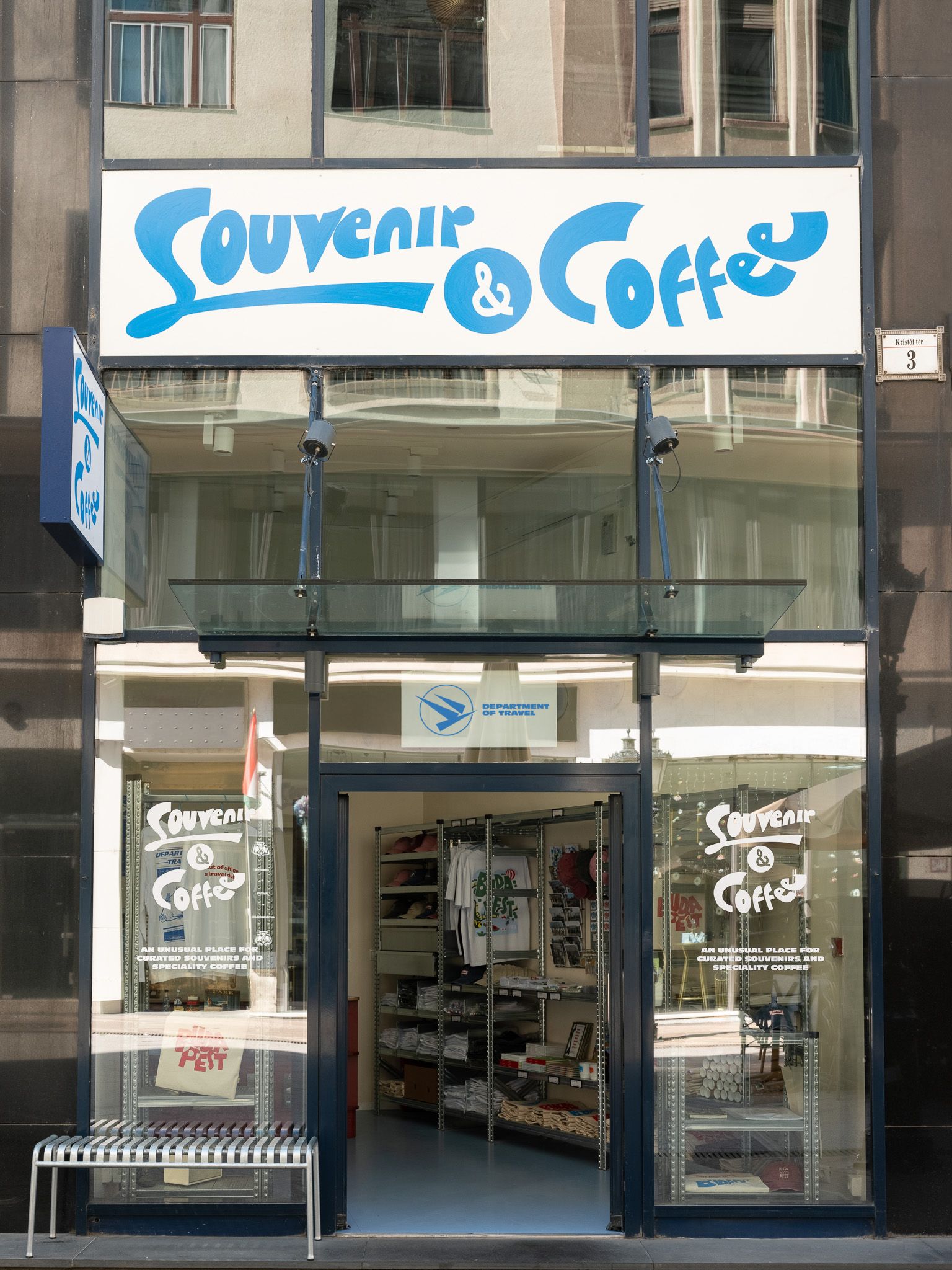
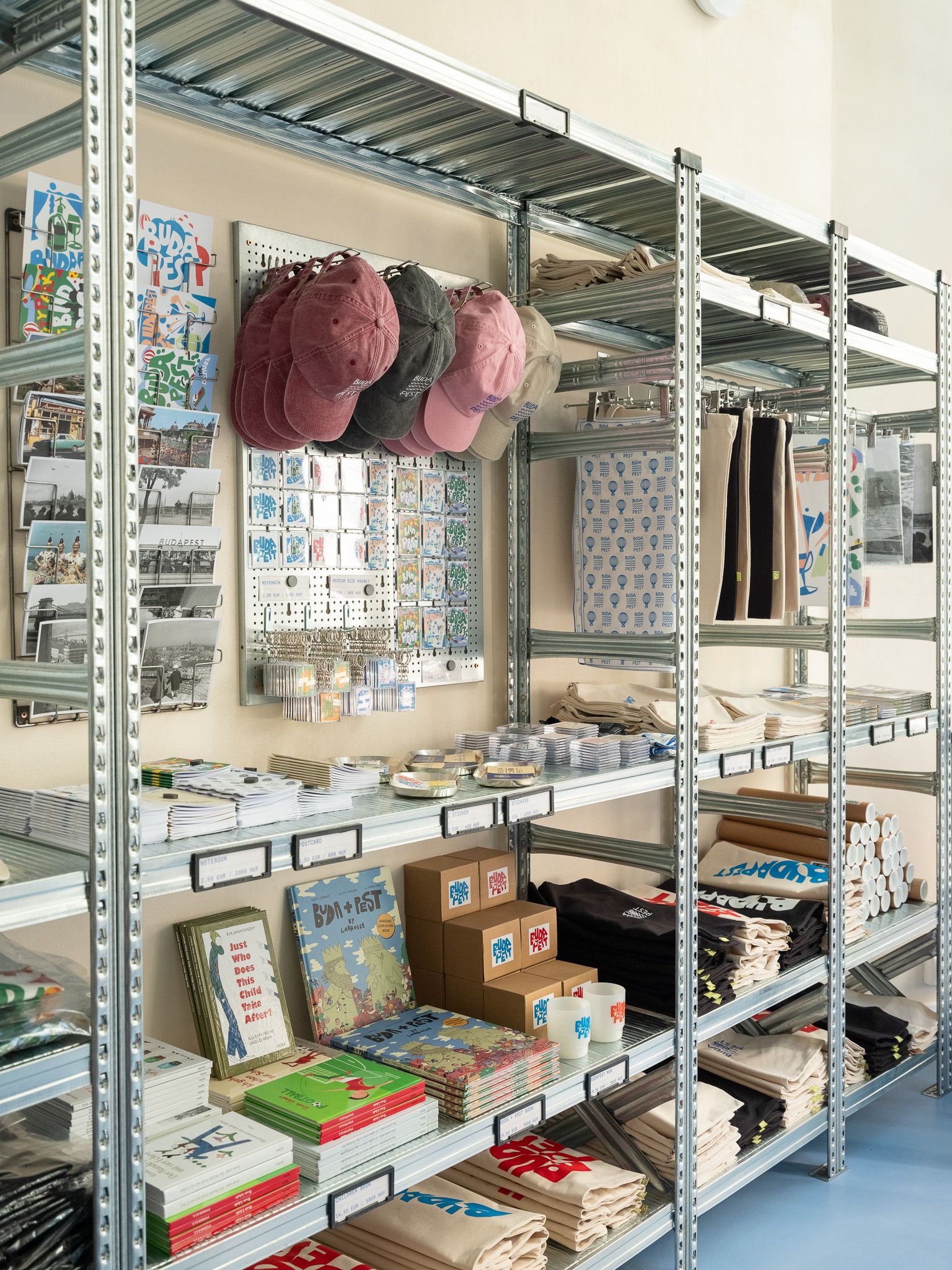
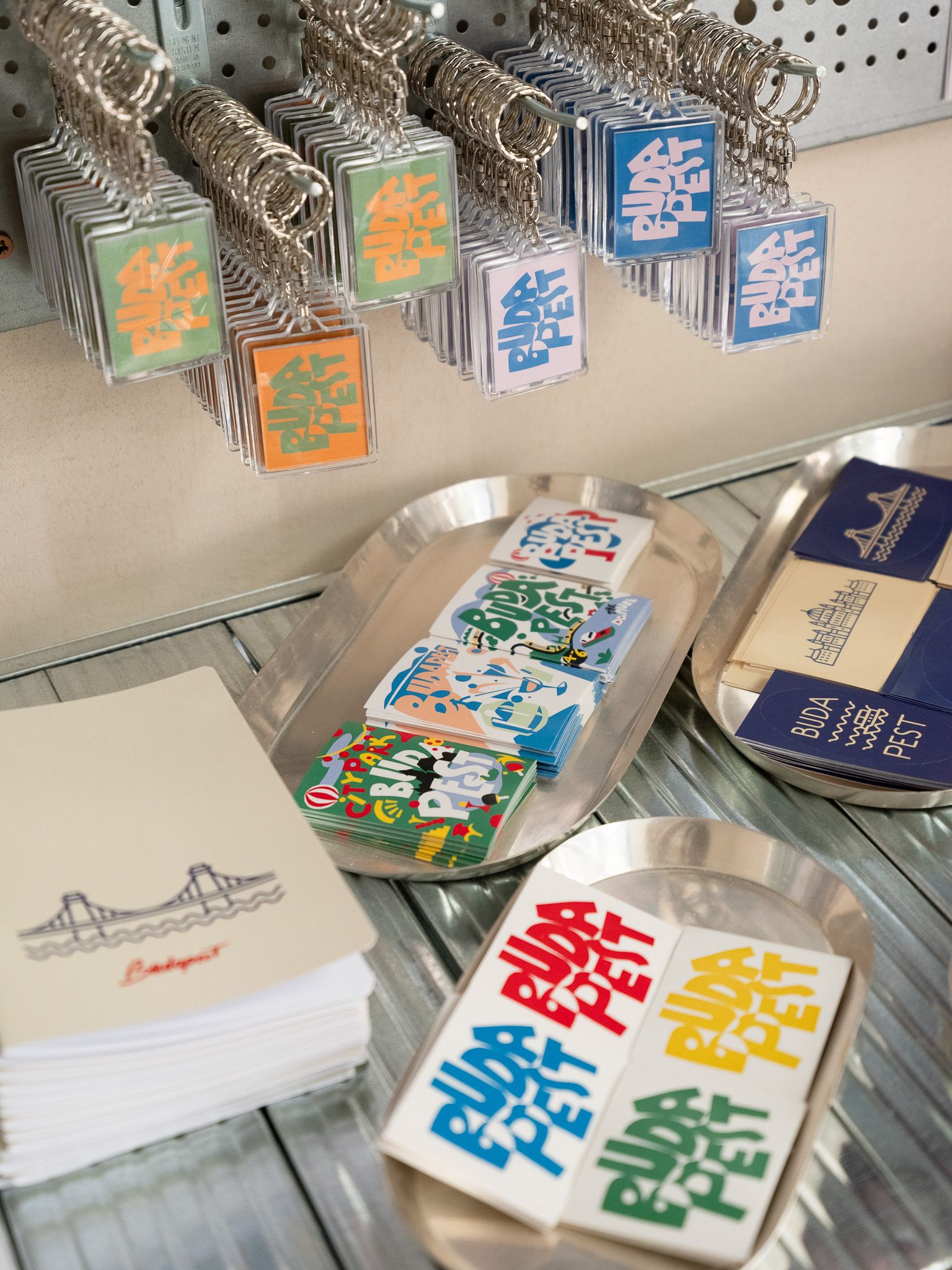
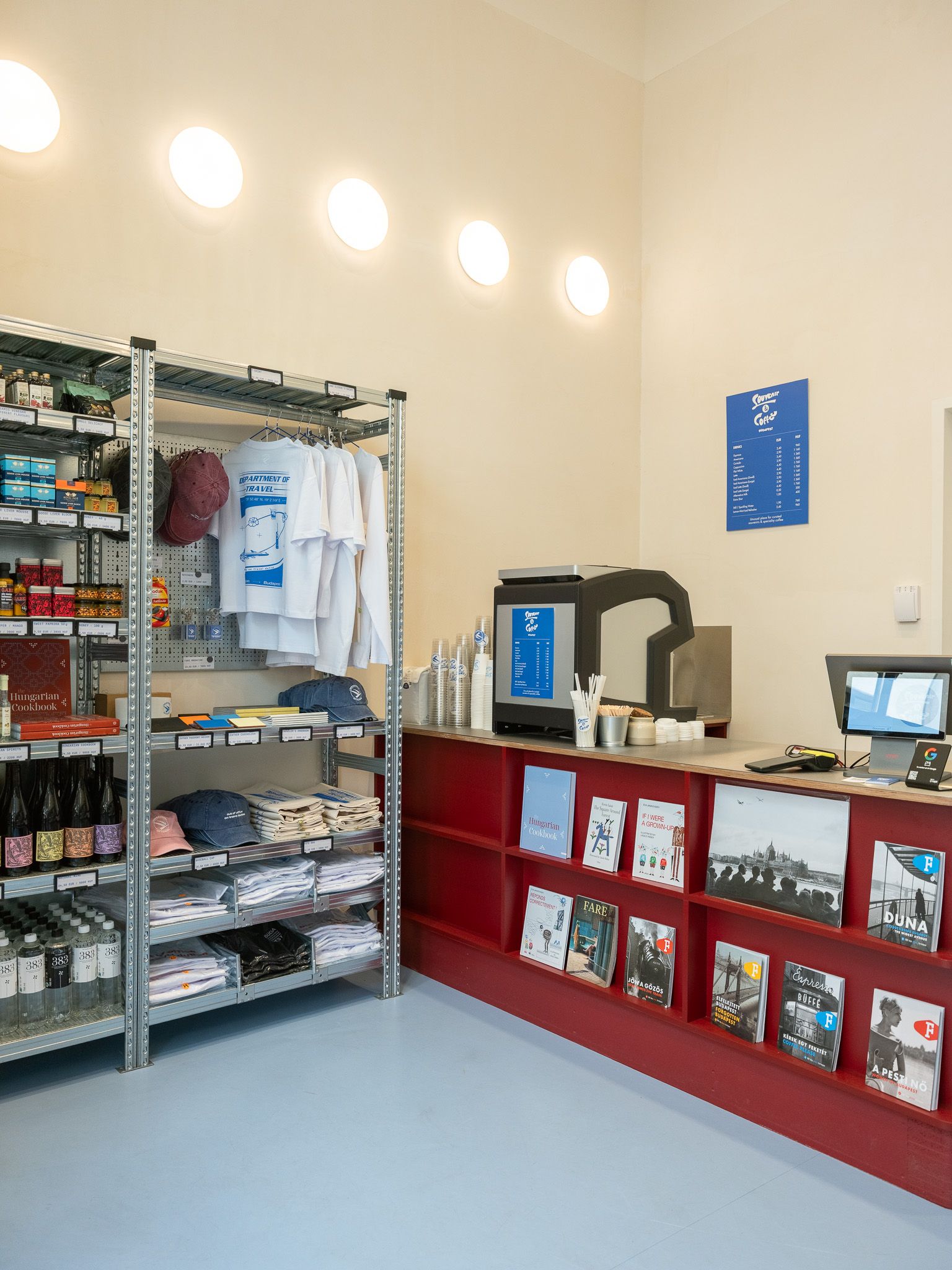
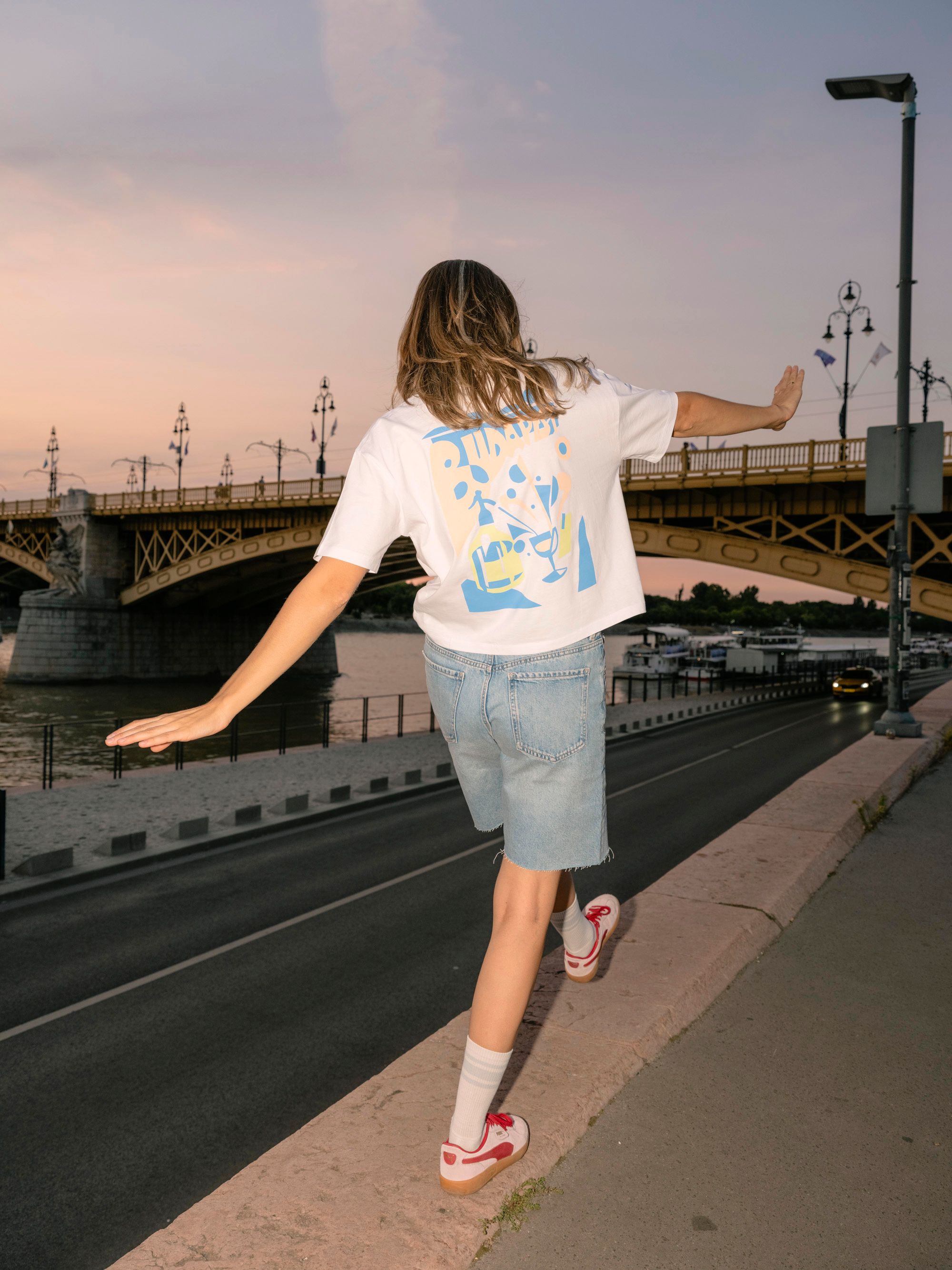
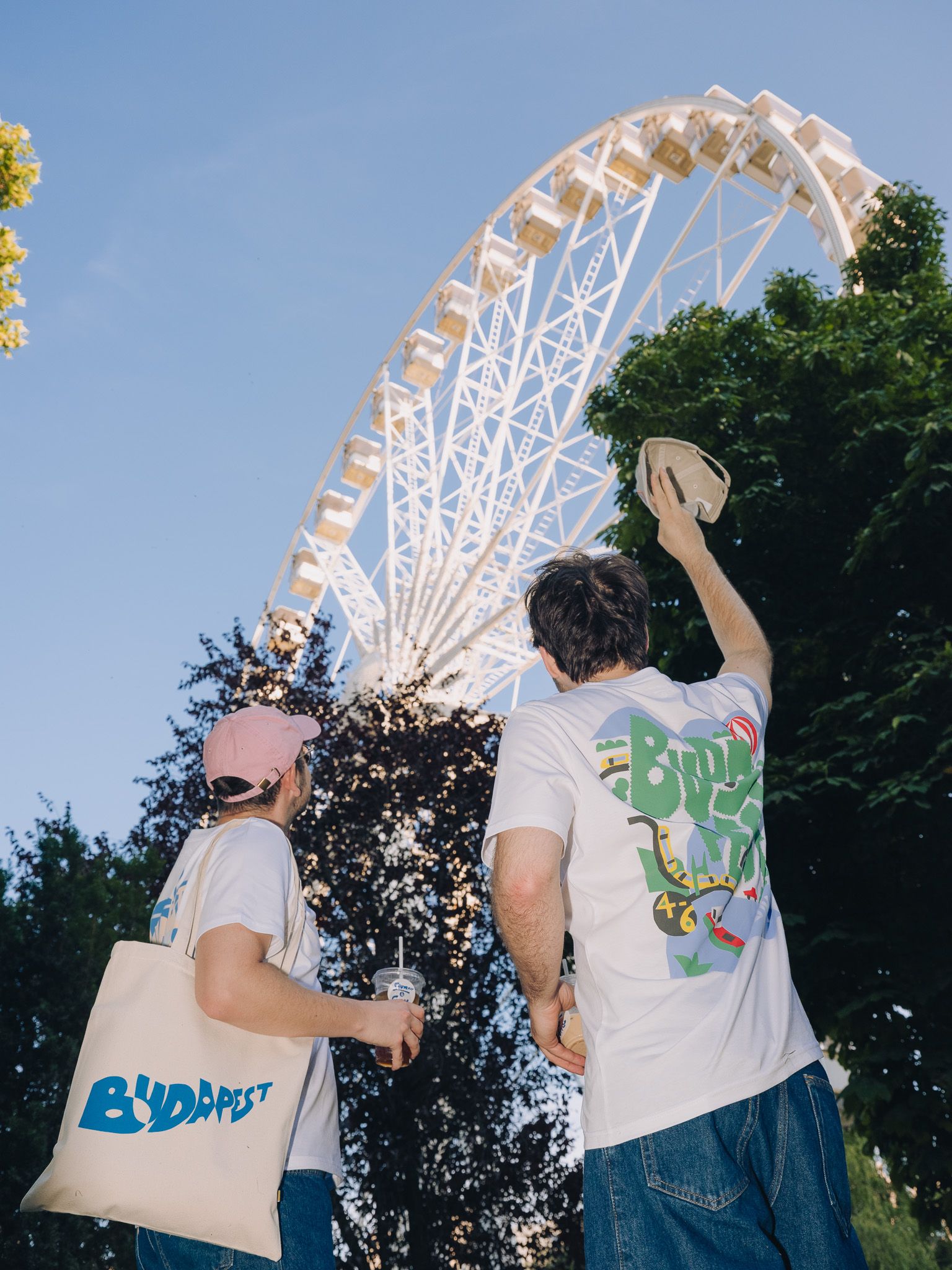
In the heart of Budapest, on Kristóf Square, Souvenir and Coffee has opened – the warm, thoughtful answer by photographer Matti Varga and his partner to the barren landscape of global souvenir culture. In this small shop, built around personal travel experiences, fridge magnets and tote bags are not mass-produced items but unique, contemporary keepsakes created in collaboration with Hungarian graphic designers and small-scale producers. Their products speak not only to tourists and expats but also to locals with a sense of pride and belonging.
Several Hungarian graphic designers and artists are involved in the collection. How do you select collaborators, and how much does daily operation rely on this ongoing creative cooperation?
We sought out artists whose vision aligns with our world and whose work functions as a souvenir – something capable of evoking a joyful, memory-like feeling.
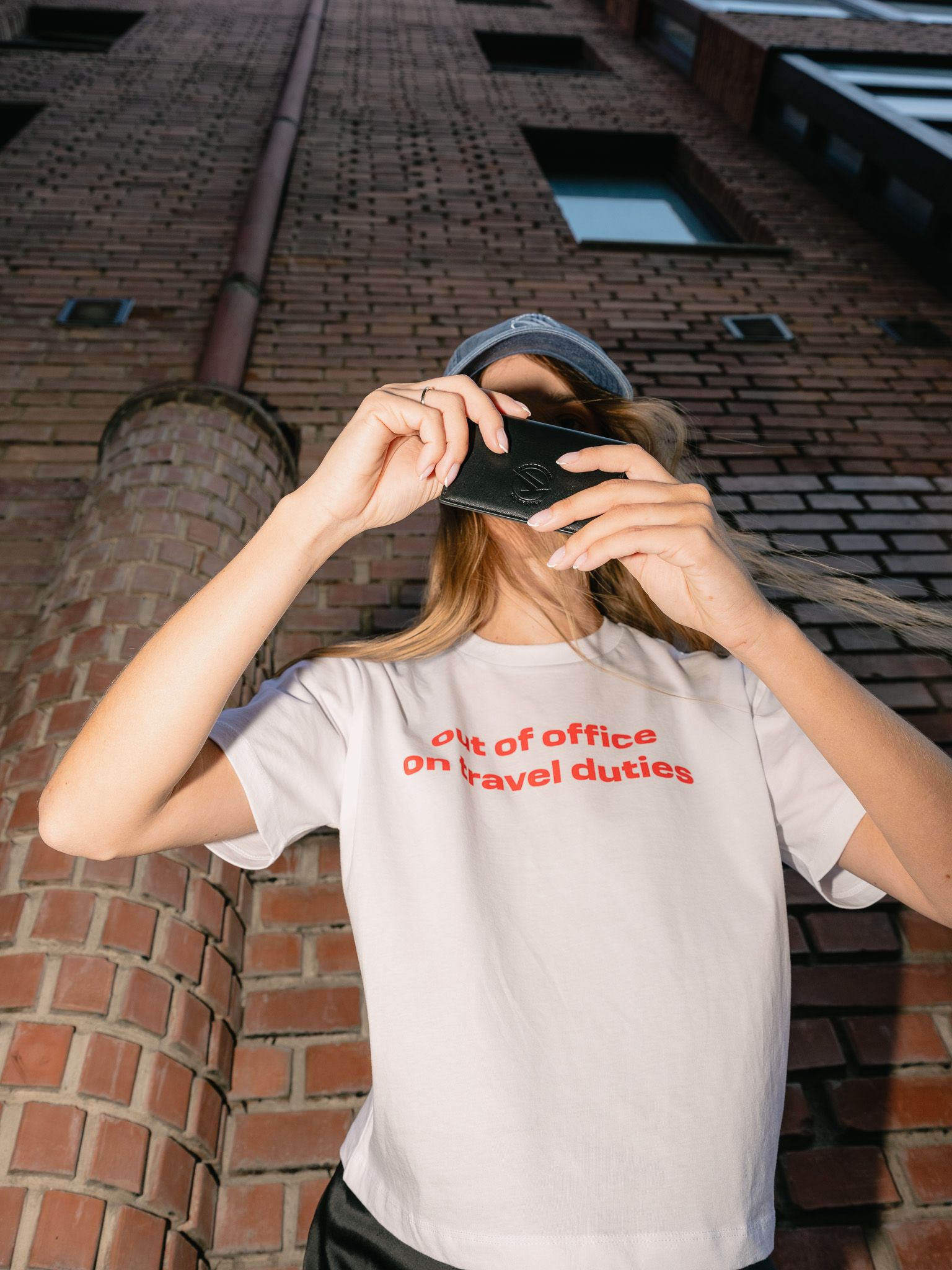
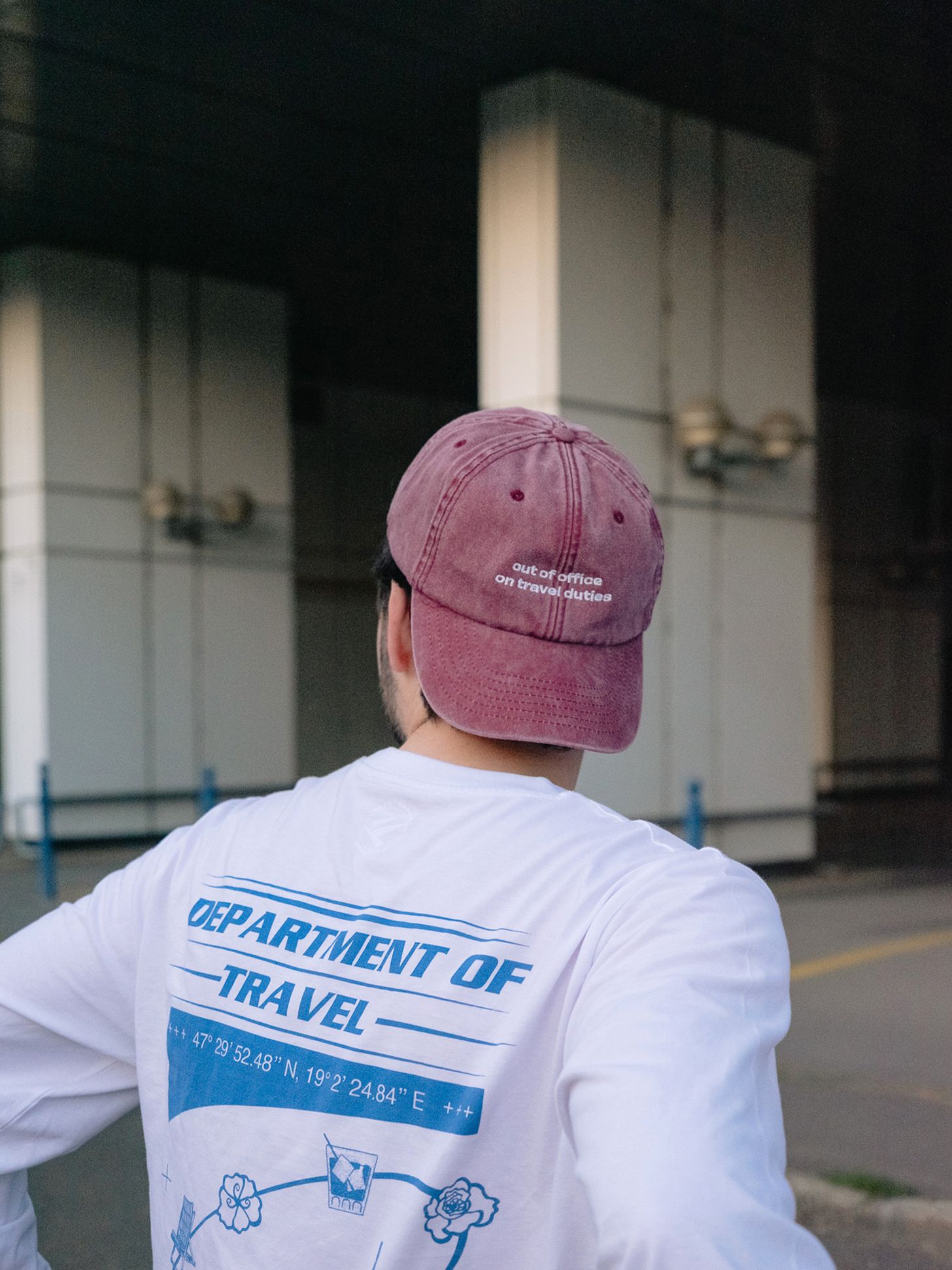
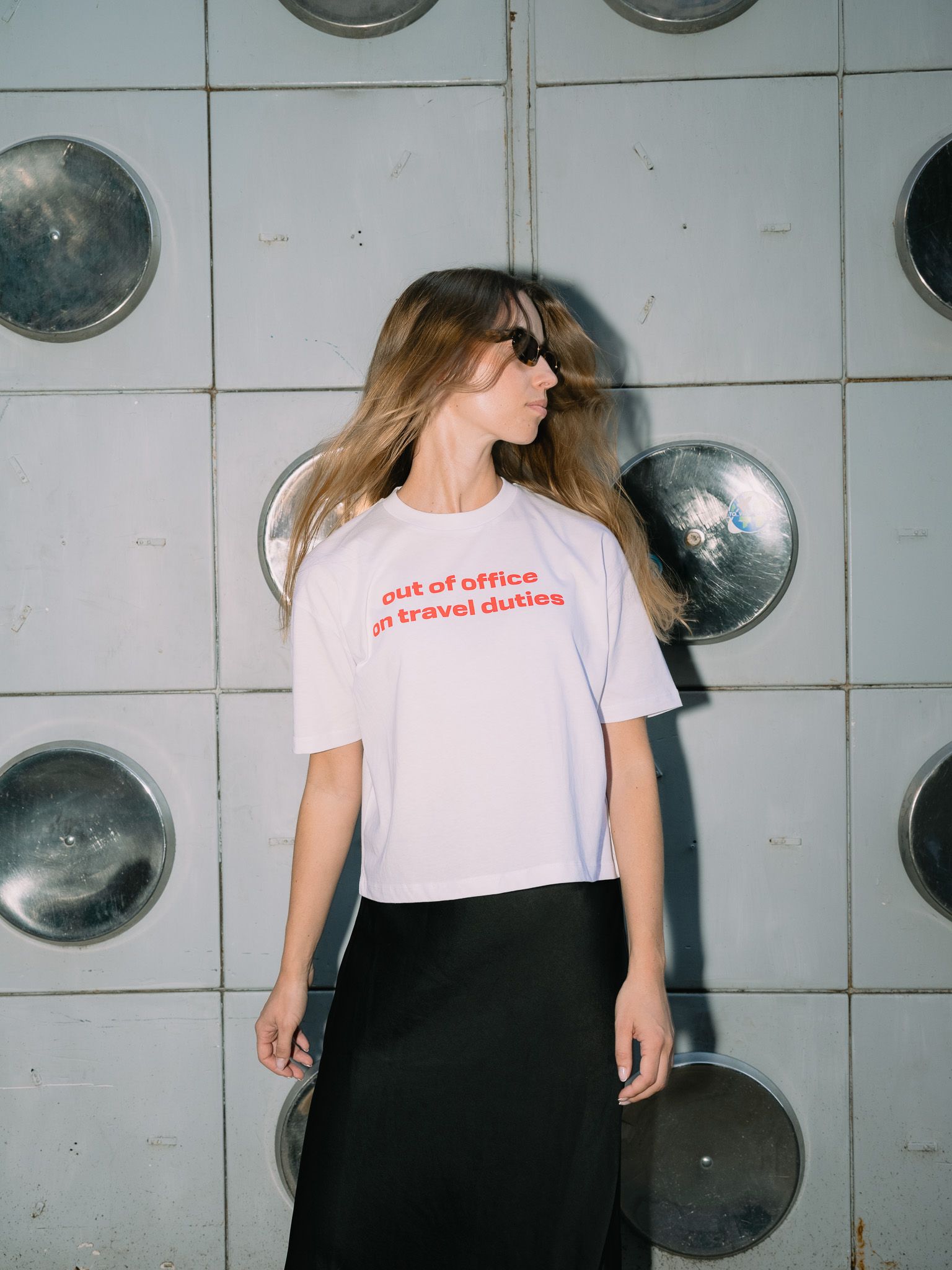
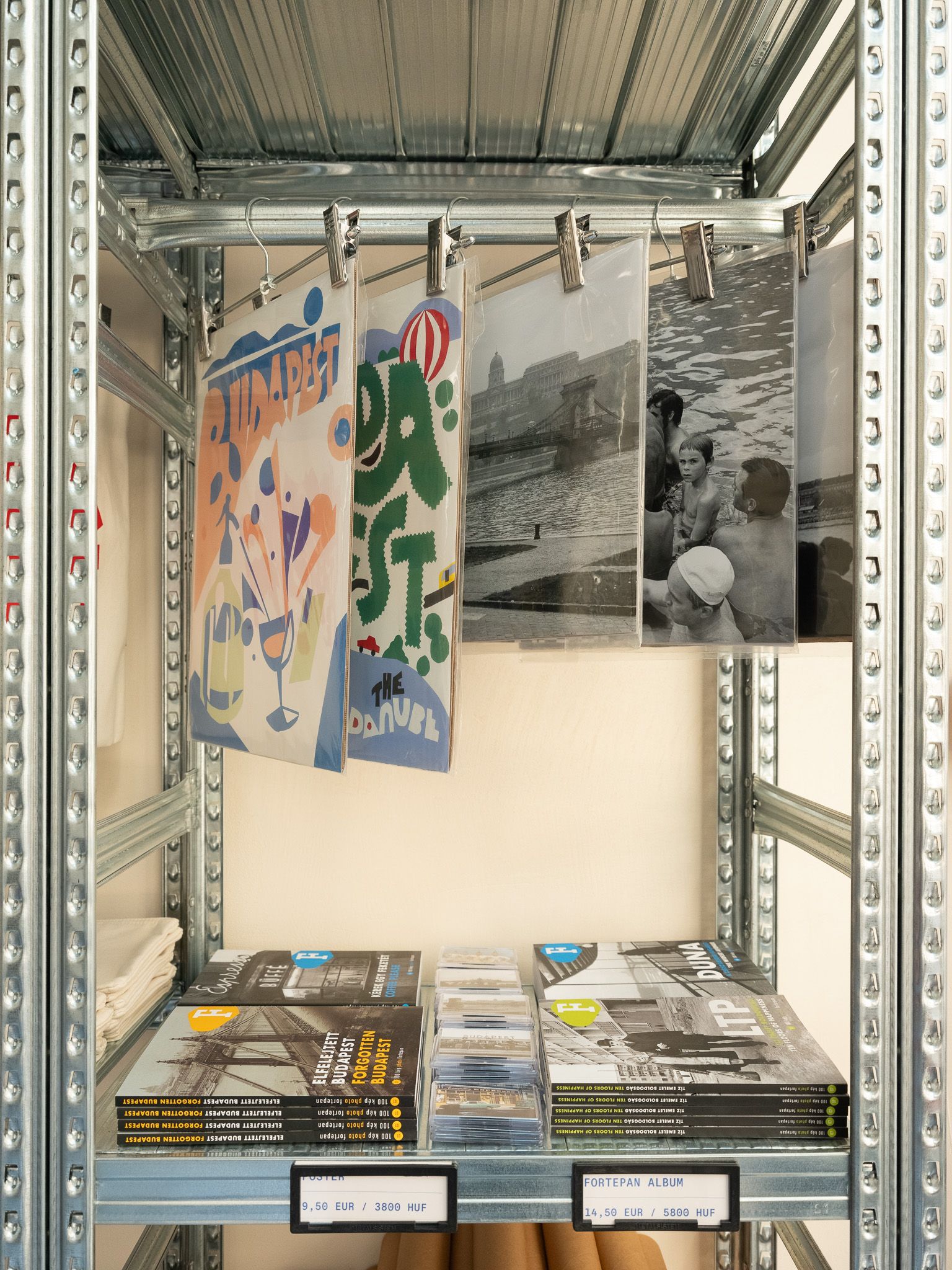
In the case of Tamás Füredi (who designed our collage collection), it was his 2019 Travel Poster exhibition that caught our attention, perfectly capturing the atmosphere of Mediterranean cities. Lehel Kovács’s work was first encountered in magazines and newspapers. His illustrations were immediately recognisable – whether in The Economist, 168 Óra or Hype&Hyper. From the outset, we knew we wanted to work with him. Márk Fridvalszki designed the Department of Travel collection, consciously different from a classic souvenir line – communicating instead the spirit of travel itself (hence the “out of office on travel duties” tagline). We had long admired his posters created for venues such as the former Bar Bizarre or the Cabrio restaurant – poster art has always been a favourite medium of ours.
Beyond them, we worked with several other illustrators: Bogi Nádi captured Budapest’s symbols perfectly, while Levente Csordás designed the finest Budapest map for us. Six months on, we are fortunate to be in a position where we can return to certain artists. New works by Márk and Tamás will feature in our winter products – these collaborations can already be considered ongoing creative partnerships.
What do you think about souvenirs: are they primarily memories, useful objects, design artefacts – or all three at once? What makes an object truly valuable for you?
For us, a souvenir is first and foremost a memory. How that memory takes shape – whether as an object of daily use, a design item, or something else entirely – depends on personal preference, local culture, or the spirit of the age. The role of personal taste is well illustrated by the fact that every friend we spoke to suggested new product ideas. Implementing them all would, of course, be impossible – especially within 17 square metres.
Our baseline is that souvenirs should carry aesthetic value, but we also strive for usability. Textiles – especially T-shirts – represent the perfect intersection of the two. We invested enormous effort into sourcing the right fabrics, cuts and printing techniques so that our T-shirts are truly wearable. One of our friends has been travelling with us for years in the same “Roma” T-shirt. That is precisely what we hope to achieve: that our products will accompany travellers on their future journeys too.
Who makes up your audience at present? Do locals find their way to you, or do you primarily cater to conscious tourists? How do you balance your selection along this line?
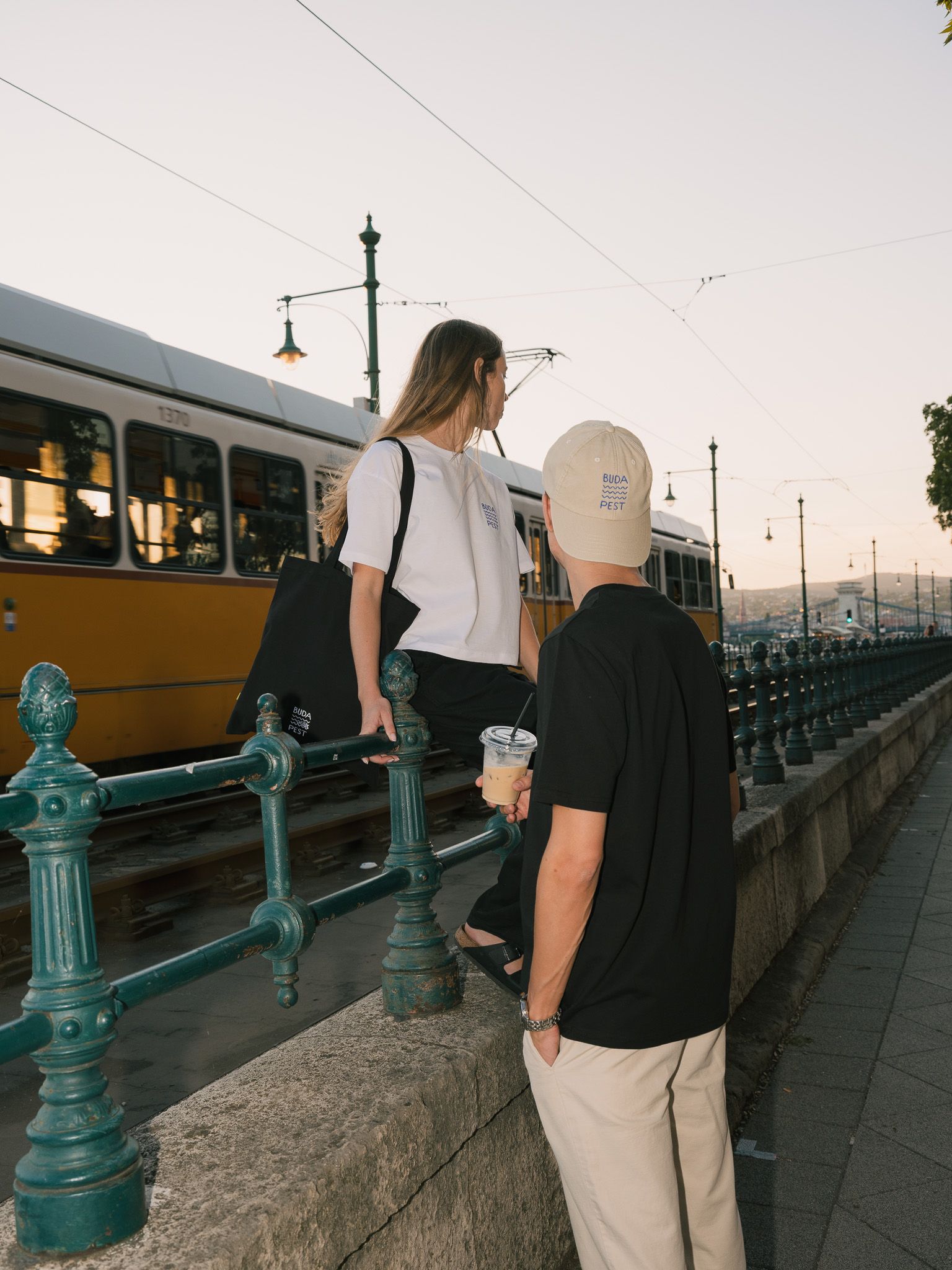
Our customers are mostly tourists, exchange students and expats. But our greatest joy is when Hungarians come into the shop, praise it, and tell us they’ve never seen a souvenir store like this before. We’re particularly pleased that Budapest baseball caps and tote bags have become favourites among the local crowd as well – in this sense of local pride, we recognise ourselves.
You mentioned travelling often – which city’s souvenir culture has inspired you the most? Where did you see examples that moved beyond mass-produced goods towards something more creative and valuable?
It’s a difficult question because the global souvenir market is, frankly, disheartening. From Mykonos to Warsaw, the same China-made trinkets greet you at every corner. The other extreme is the overused folk object, which has lost its authenticity – we have plenty of those in Hungary too, whether carved chess sets or little wooden boxes with hidden keys.
Perhaps the best example we found was in Greece. Last summer on the island of Hydra, we discovered a tiny shop displaying a small selection of leftover souvenirs from the late 1990s and early 2000s. We came across numerous clever graphics and imaginative designs. One of our favourites was a retro relic: a T-shirt from the 2000 Athens Olympics.
Another path is the concept store, where local designers’ creations are sold. This, too, is an important arena – Budapest has good examples, like Pauza. But we deliberately chose a different direction. We did not want to open another design store; we suspected many tourists turned to those places precisely because the quality of traditional souvenir shops was too low. We are not ashamed of postcards or fridge magnets, because we believe souvenirs need not be defined by €100-200 design trinkets. We simply wanted to create a quality souvenir shop – nothing more, nothing less.
Contemporary graphic language is strongly present in your offering. How does this connect to current international design trends, and to what extent is it a conscious decision for Budapest to be part of this global discourse?
Budapest is well positioned here; there are plenty of strong initiatives – take POV Budapest, for instance. Inevitably, design trends shape our visual world, both subconsciously on an individual level and consciously in our business thinking. Trends matter, because they provide tailwinds. But we don’t just follow them – we reinterpret them, contribute to them, and thereby help shape the conversation. Fortunately, we are not alone in this ambition in Budapest.
Souvenir & Coffee appears to be both a business project and a cultural mission. Can a souvenir become an active tool in shaping the city’s image? How did you define what you want to convey about Budapest – and how might contemporary souvenirs help redefine the city’s visual identity?
Yes, it is both a business and a creative project – but first and foremost it is a business. That foundation allows it to be sustainable, to have long-term cultural impact, and to maintain our independence. The shop is not a hobby: we have annual, monthly, weekly and daily sales targets.
A city's image can be understood as the impression that takes shape in a tourist’s mind – so we see our role not only in visual terms but also in terms of service. Globally, souvenirs and souvenir shops are among the most common examples of tourist exploitation. For us, fair business practice is just as crucial as visual language. Alongside showcasing the talent of Budapest’s graphic community, our goal is to ensure that visitors can spend their souvenir budget in a shop that truly deserves it.
Photos: Souvenir and Coffee