


Is this how Hungarian agriculture should evolve?
The Hungarian—and indeed the European—agricultural sector faces a succession of challenges. How can one navigate a world in flux, and to what extent can professional advisers assist? We spoke to Gábor Nagy, founding managing director of the consultancy Agrina Consulting, about Ukraine, Donald Trump and Hungary’s farming community.
As an agricultural consultant, how do you assess the succession of challenges in recent years—war, inflation, drought, tariffs?
Advisers are most needed when businesses want—or are compelled—to change their usual course of action. At such times, it is invaluable to have an external perspective and expertise. Right now, numerous external factors are confronting not only the food supply chain but every market player. What they have in common is that each represents a force majeure event for which few were prepared and that strike at the very foundations of their enterprises. In this environment of information overload, it is crucial to interpret and evaluate data objectively at the company level. As consultants, we can propose strategies that may not feature in the mainstream but are economically rational and beneficial to the business. Take Ukraine, for example: it represents a challenge for Hungarian agriculture when we think of our traditional crops—sunflower and maize—but these are also regularly jeopardised by drought. It may be sensible for farmers, where those crops are perennially unprofitable, to consider alternative enterprises, and to redeploy their know-how and investment into regions where such cultivation pays—perhaps in Poland or Ukraine. Naturally, factors such as language barriers and the ageing farming population pose rational obstacles for most producers. Yet for medium-sized and larger farms, these ought not to be insurmountable. Another major challenge is the tariffs introduced—and threatened—by the US President. Consequently, EU producers and exporters must rethink their strategies. In retaliation, Chinese counter-measures have excluded US farmers from key Chinese markets, prompting them to seek new outlets—which for them now include the EU’s internal market and traditional EU export destinations. Hungarian producers must therefore contend not only with the effects of climate change, but also with the question of where—and at what price—they can sell their goods. Although the EU has free-trade agreements with over 70 countries, roughly 80 per cent of Hungary’s export market remains within the EU. This over-reliance makes us vulnerable if agricultural—or other—products suddenly pile up on the internal market. Changing this would require departing from established habits. Finally, you mentioned inflation—but perhaps it is not inflation as such, but the gradual yet unpredictable weakening of the forint that complicates pricing and fuels inflation. A weak forint increases input costs, which ought to be reflected in prices, yet prices are typically set by world markets. This means that either producers must export to benefit from the weak currency, or they must raise domestic prices. If they cannot export and cannot increase local prices, losses are inevitable. Moreover, outbreaks of foot-and-mouth disease and avian influenza have pushed many farmers into dire straits. They need state support that not only compensates losses, but also encourages the continuation of livestock farming.
In such an unpredictable business climate, what exceptional value can Agrina offer?
We provide a fresh perspective and concrete assistance in executing elements of corporate strategy. Although our roots lie in public administration, our team members have spent nearly ten years operating in the marketplace, aiding both global and Hungarian stakeholders and interest groups. We understand EU regulations, possess an extensive international network, and remain fully aware of the domestic political and economic environment. Over the past decade we have built such professional credibility that both our clients and government and EU bodies trust us. Our principal contribution is to interpret the risks and opportunities companies face. We take a broad view of risk—encompassing proposed EU or national legislation, but also sudden, substantive shifts in consumer behaviour. When a strategy is in place, we help to advocate for it before legislators and other stakeholders.
What consequences might Ukraine’s prospective EU accession or deeper integration have for the agricultural sector?
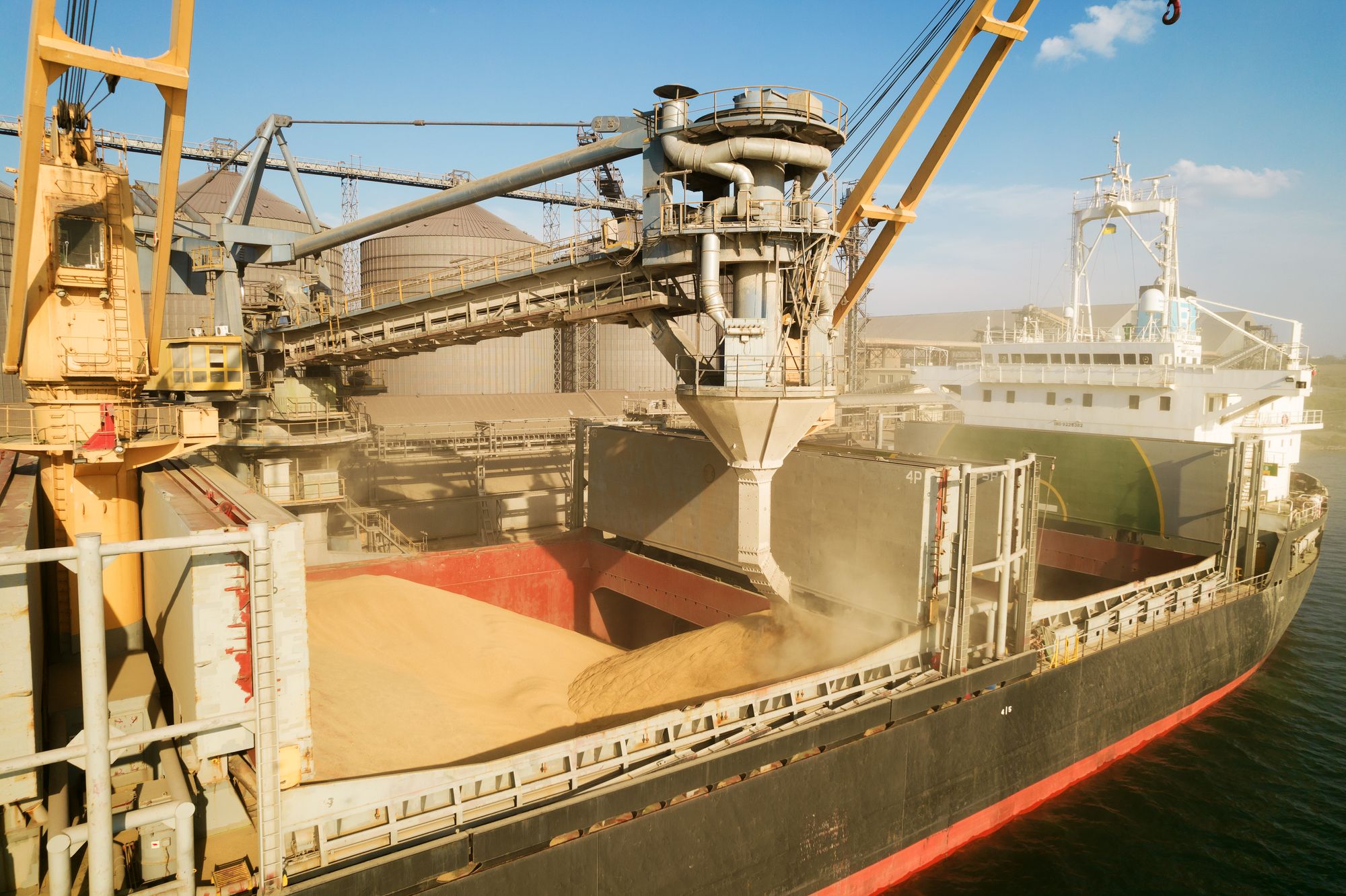
Firstly, Ukrainian agricultural products have entered the EU market in recent years with virtually minimal restrictions. Neither EU nor Hungarian agriculture collapsed, yet it is clear that the combined impact of Ukrainian imports and climate change has taken its toll on Hungarian farming. We anticipate that Ukraine’s accession will take several more years, and preparations are both possible and necessary. We also hear that the EU will significantly limit duty-free imports of Ukrainian goods—the interim must be used wisely. Today, Ukraine has become indispensable to the EU: as a buffer state, it is needed more now—given the US’s relative withdrawal—than at any time since the collapse of communism. Its post-war reconstruction could impart to the struggling European economy a boost comparable to the Marshall Plan after the Second World War. However, that comes at a cost. In agriculture, Ukraine’s accession is likely to reconfigure European production structures. The problem for Hungarian farming is that we generally grow the same crops as Ukraine, but with far smaller holdings. One large Ukrainian farm can load not just a few lorries but an entire grain vessel—no amount of subsidy will make us competitive. Change is essential. Independently of Ukraine, climate change demands that we transform agriculture: we must respond to drought and disease outbreaks. This process could outpace Ukraine’s formal EU accession.
How can companies prepare for these changes?
Primarily by investing in training and making their farms more flexible. A shift in mindset is needed: not to produce what and how we have always done, but to meet market demand—and to experiment where appropriate. For this, farmers require support and a safety net so that they dare to switch or innovate. Since accession, we have emphasised the importance of producer cooperation, yet in reality only traces of such co-operation have emerged. There are small, self-organised groups where farmers discuss seed varieties and technologies. I do not believe that decisions about what and where to grow can—or should—be dictated from Budapest. However, producers could be supported so that they can choose, from a wide spectrum and well prepared, the right options. Equally critical is organising into value chains. Arable farmers face risks from crop diseases, which affect not only them but also processors and financing banks. These stakeholders could form a risk-sharing community in which each reduces its exposure while securing its own return. Facilitating such communities is a key objective for Agrina. And that addresses only the first links in the value chain: we have not even touched on livestock farming, food processors or traders, who face further layers of risk.
Much of what you say is couched in the conditional—do farmers even want to prepare?
In recent decades Hungarian farming has become dependent on EU subsidies—almost like an addict—and was geared primarily to maximising subsidy receipts with minimal investment. Market prices were seen as extra profit. As a result, many farmers’ market sensitivity diminished, and short-term profit-seeking investors appeared. Today the primary challenge is not Ukraine, but the increased costs stemming from tightening EU regulations, a weak forint, inflation, wages and levies. EU support, steadily devalued, no longer covers these costs. On top of this came droughts, epidemics and Ukrainian imports. All this in an agricultural community whose average age is 57.9—mirroring the EU average—and in which, in 2020, 61 percent of producers had no agricultural qualification—a notable improvement on 2010’s 80 percent.
Besides Ukraine there is also Mercosur in South America—how should policy be viewed in that case?
The EU-Mercosur agreement offers Hungary’s agriculture no real benefit, but increases competition on the internal market. Thanks to Trump’s tariffs, some member states that had firmly opposed the deal began to rethink their stance, and we expect the Council to approve it this year. It will not trigger armageddon, since duty-free access for sensitive products is quota-restricted. Yet in some sectors—ethanol, for instance—the duty-free quota is very high; in others, such as poultry and honey, quotas are large and Ukrainian producers are already present; while for a few, including isoglucose (also maize-based), there is no quota, so Mercosur goods could enter freely. The two largest Hungarian purchasers of maize buy two million tonnes annually; if competition increases and yields remain similar to recent years, problems could ensue. Ultimately, every agreement is tested in practice—and market uncertainty from Trump’s tariffs further complicates impact assessments. When we advise clients, we narrow our analysis to specific product groups to gauge risks and opportunities.
What strengths does the Hungarian market and agriculture possess in this changing world?
Relative to its size, Hungary has extensive agricultural land. We have rivers and waterways that we do not manage as well as we could. We enjoy GMO-free status, though to date this advantage has been enjoyed by only a narrow circle of farmers. Compared with the EU average, our use of pesticides and fertilisers is lower.
And in which areas should we develop?
Knowledge, openness, language skills, flexibility, market orientation and sales networks. A major issue is that even many large Hungarian agribusinesses still produce primarily for the domestic market. Those with the necessary skills and sufficient capital can seize opportunities in the shifting market landscape. Another challenge is knowing when to bring in external expertise: many believe they can manage on their own, yet the timely involvement of a prepared consultant can pay for itself many times over. As the market status quo is upended, new players may emerge in various sectors—and these could well be Hungarian.
Dr. Gábor Nagy is Managing Director and consultant. He began his career with 16 years of experience in public administration and over the past nine years has served as a strategic advisor to global, international and Hungarian companies and stakeholder groups. He holds extensive EU expertise in trade policy, agriculture, state aid, fiscal policy, foreign policy and the digital sector.