


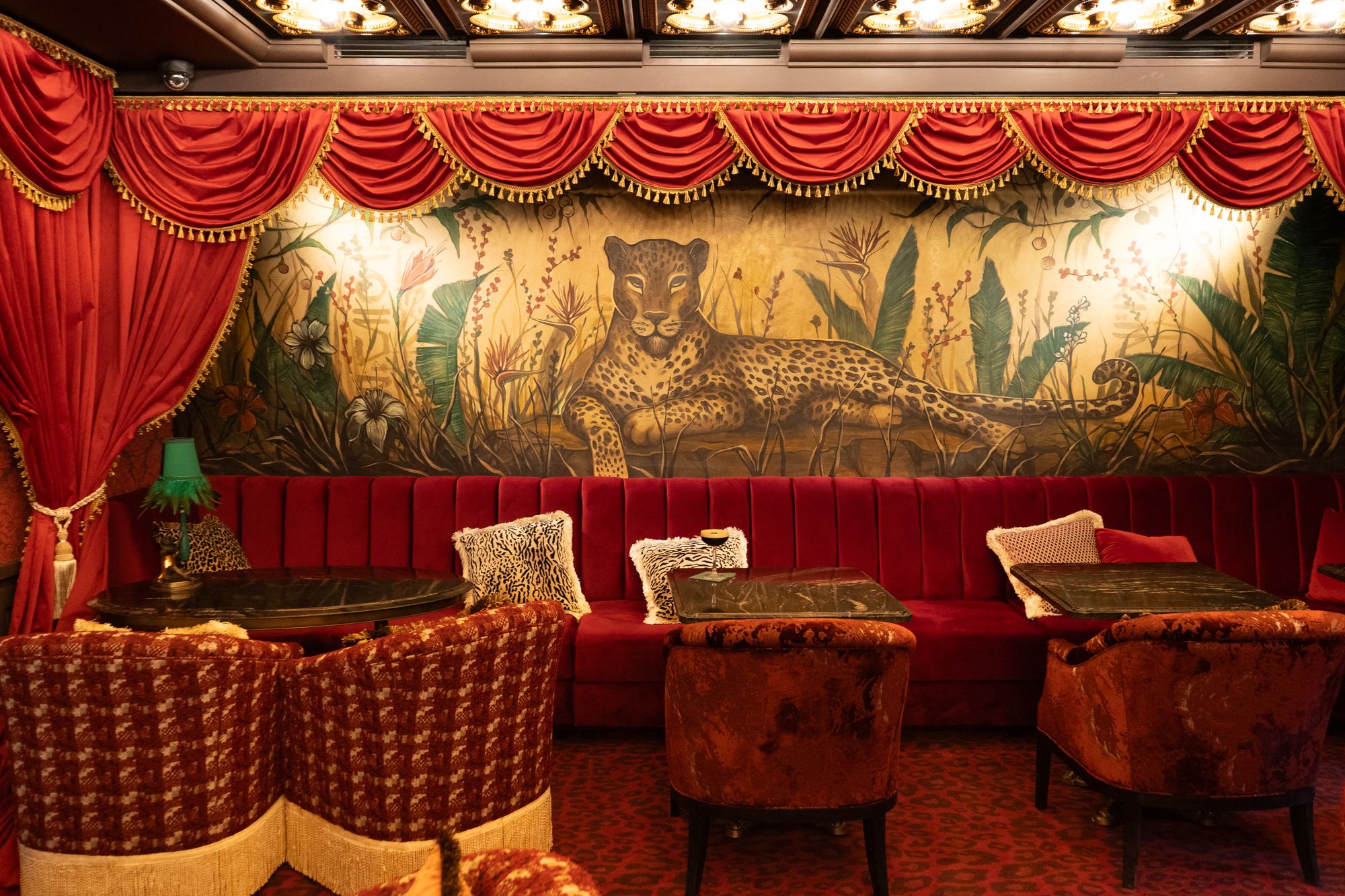
The place where you don’t have to get up after dinner.
Budapest’s gastronomic map has opened up over the past decade: world-class Japanese, Chinese, Russian cuisine — there’s at least one place from each that can hold its own internationally. There’s no shortage of Italian restaurants and Neapolitan pizzerias either, but that particular Italian feeling — the atmosphere shaped by textures, flavors, and a certain effortless lightness you experience on a terrace in a Tuscan village or in a cellar tucked into a Roman alley — is almost nowhere to be found here. For years, I’ve preferred to just buy a plane ticket to Bari or Turin — easier than hoping. With this preconception, I stepped into Popolare on Király Street. That was a mistake — sometimes it’s worth being surprised.
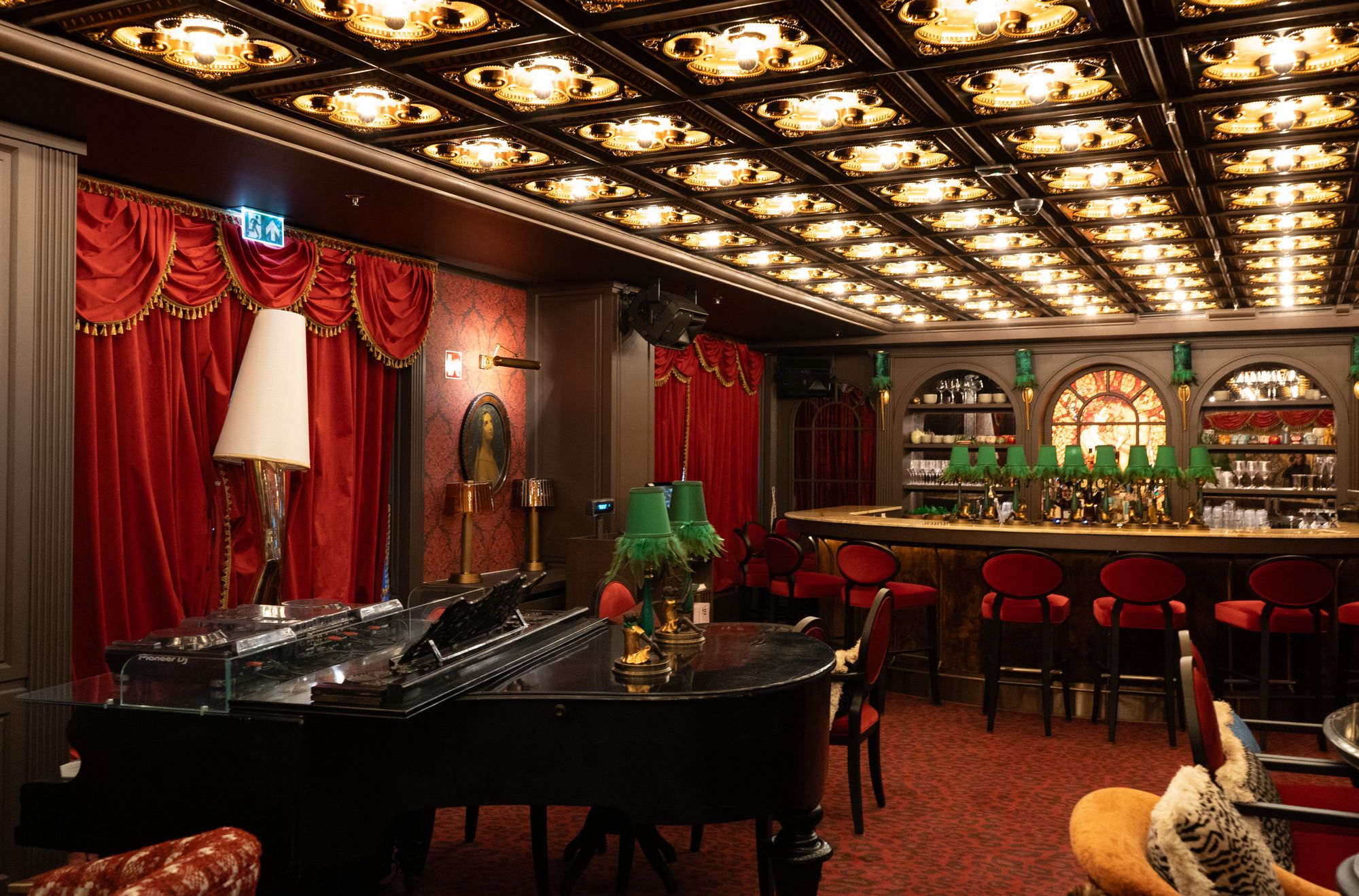
Living space or restaurant?
Popolare isn’t really a restaurant in the classical sense. It’s a community space, with all the benefits that come with that: local, youthful, elegantly designed, yet radiating an everyday ease. As they put it themselves, their goal is “everyday life, elevated mood” — and based on our experience, this isn’t empty marketing, but a real concept.
Breakfast is served all day. Even on weekends, late in the morning. You can drop in for a coffee, and have dinner at the same table hours later. And the concept goes even further. Popolare includes Coco, a speakeasy bar where the piano doubles as a DJ booth — cool. Few places in Budapest have attempted a setup where you don’t have to get up after dinner and move across the city: here, entertainment is just a few steps away. Dining, conversation, a cocktail or two, then drifting into a more intimate space — finally, all of this can happen in one place. There’s also a Salon, a tiny cultural nook hosting literary evenings, crochet workshops, chess and poker nights, wine tastings. The core of the concept is dynamism: the space shouldn’t stop at a single function.
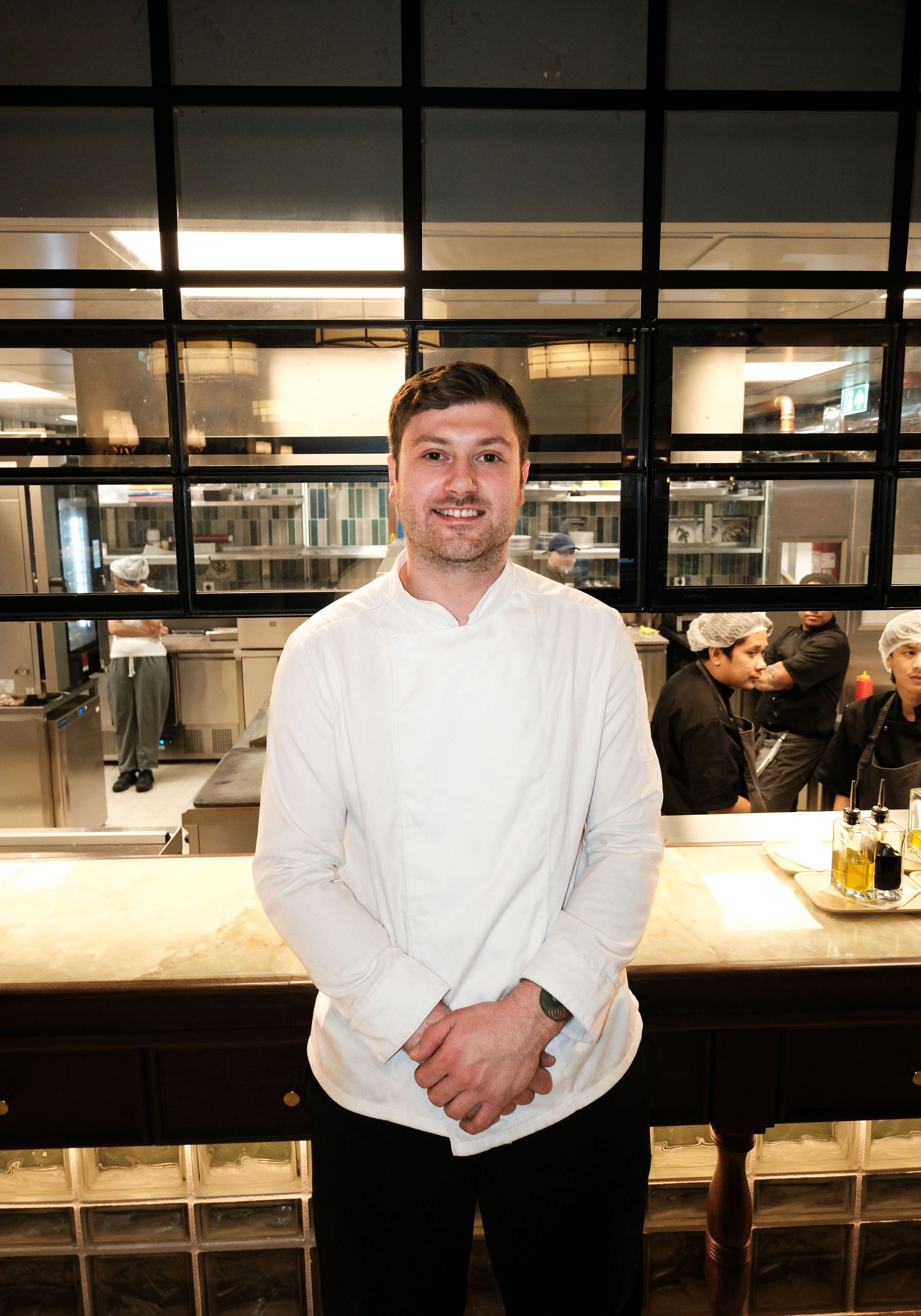
Nicola and the pizza that’s neither Neapolitan nor Roman
The kitchen is led by Nicola, who comes from the Bologna region, with a family culinary heritage behind him. He’s had his own restaurant in Italy; Budapest is a challenge for him, not a necessity. You can feel that on the plates.
The secret of the pizza is surprisingly simple: it’s neither Neapolitan nor Roman, but a fusion of the two. Personally, I’m obsessed with Roman pizza — the Neapolitan revolution has been raging in Budapest for years now, to a rather boring extent.
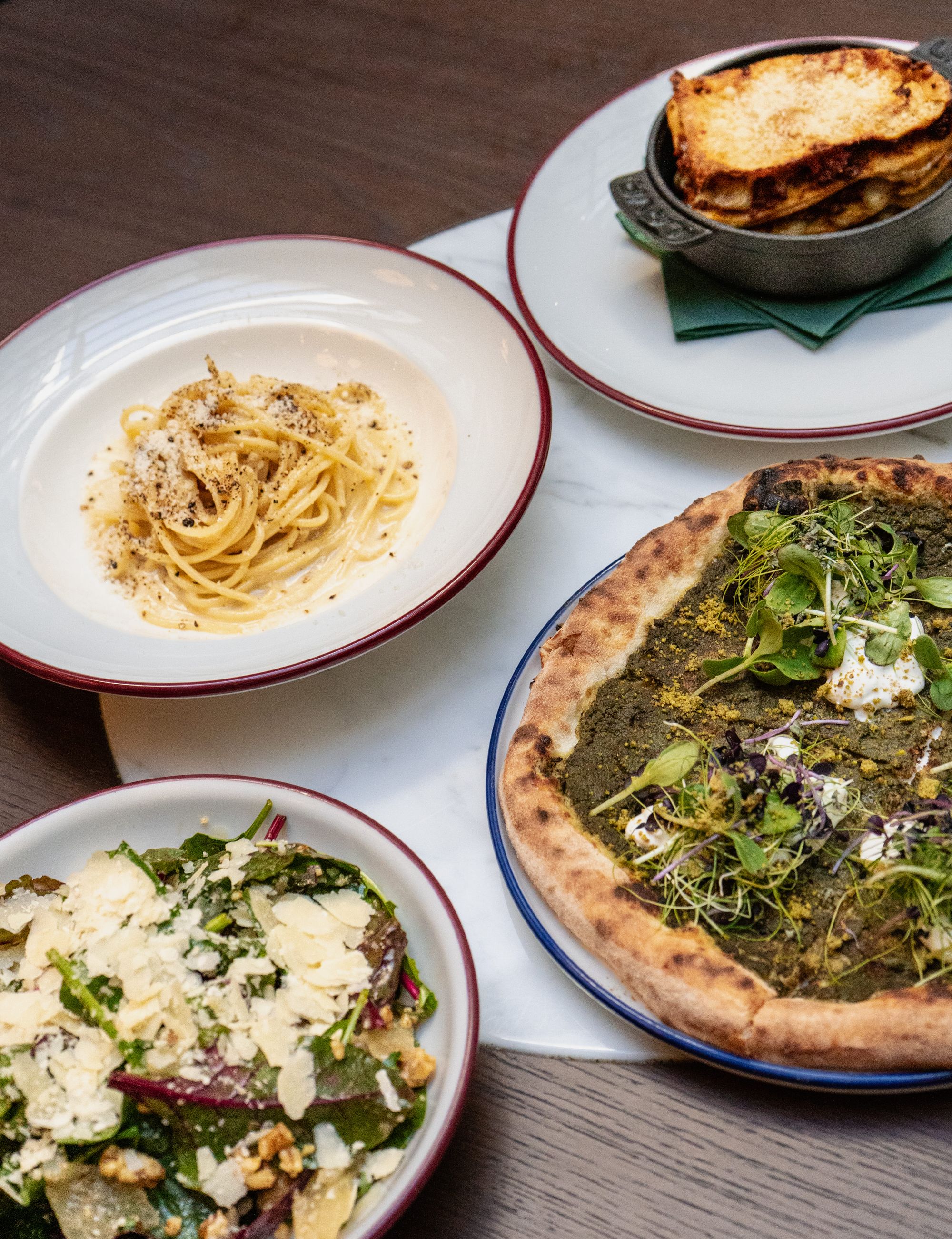
Popolare’s pizza doesn’t enter this debate: it follows its own path. Special mention goes to Nicola’s mini pizzas among which the Zucchini e Stracciatella (burnt zucchini, stracciatella, microgreens) is unbeatable in its category. Perfect as a starter, main, closing bite, or snack.
The zucchini is roasted whole in the oven, then turned into a purée, and the flavors created during charring are unique. The dough is light yet substantial — this in-between, hybrid philosophy is clearly perceptible, and it works.
The lasagna that rebelled against tomato sauce
We need to pause here for a moment: Popolare’s lasagna goes against pretty much everything I’ve experienced in Italy. And in hindsight, I have to admit — it’s right. The pasta is classic, homemade, made solely from eggs and flour. In Nicola’s interpretation, lasagna doesn’t require tomato sauce; in his view, in Italy it’s often used to mask slightly dry or slightly burnt parts.
Instead, he highlights exactly this contrast: the top of the lasagna is crispy, lightly browned, while the inside is soft, meaty, and saucy — and the oven-roasted layer adds a distinct umami depth that’s completely missing from the commercial, tomato-heavy versions. This is one of the most interesting gastronomic twists I’ve encountered recently, and the result proves it: this is probably the best lasagna in Budapest right now.
“Tomato sauce in Italy is often added to hide what didn’t turn out right. Here, there’s nothing to hide.”
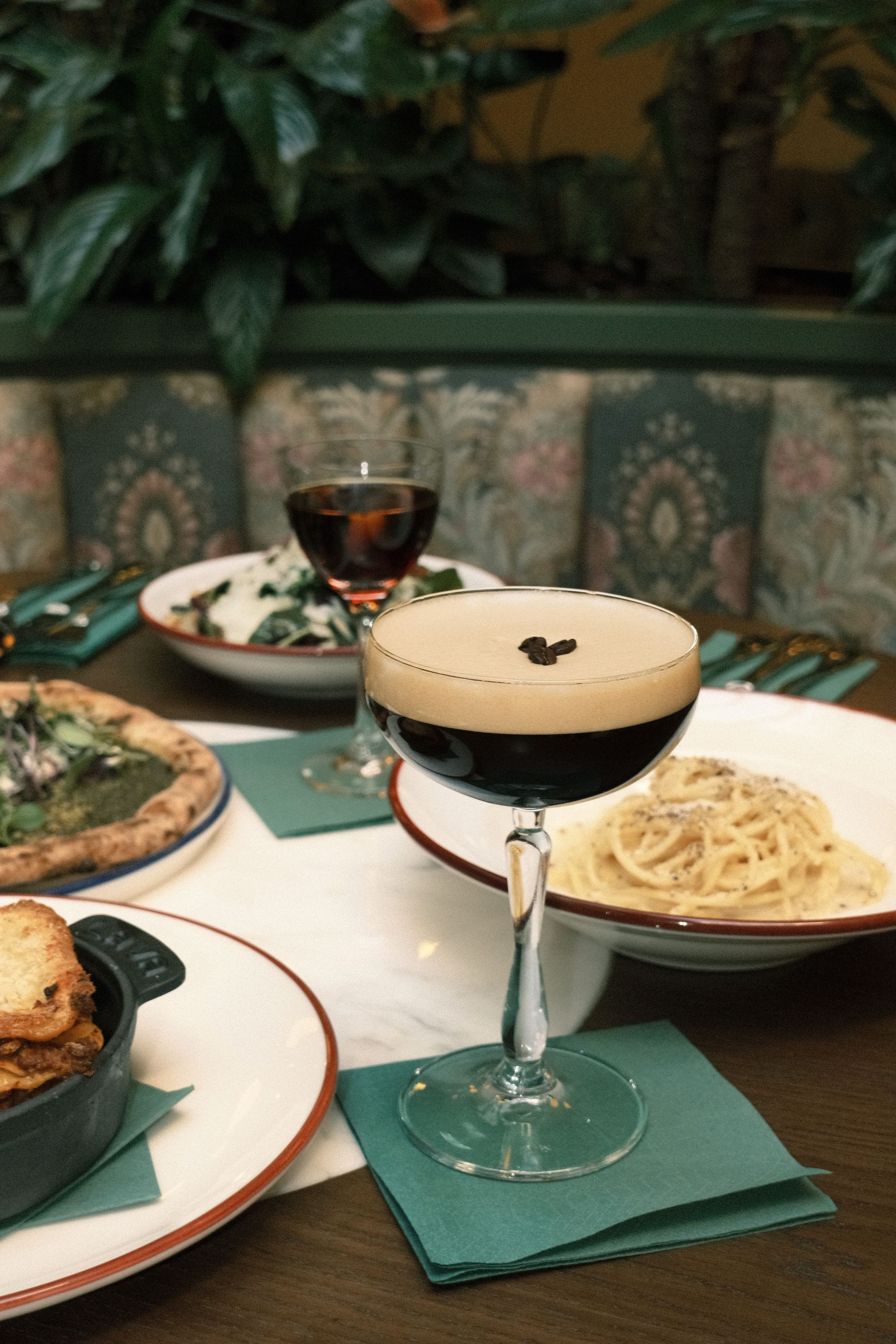
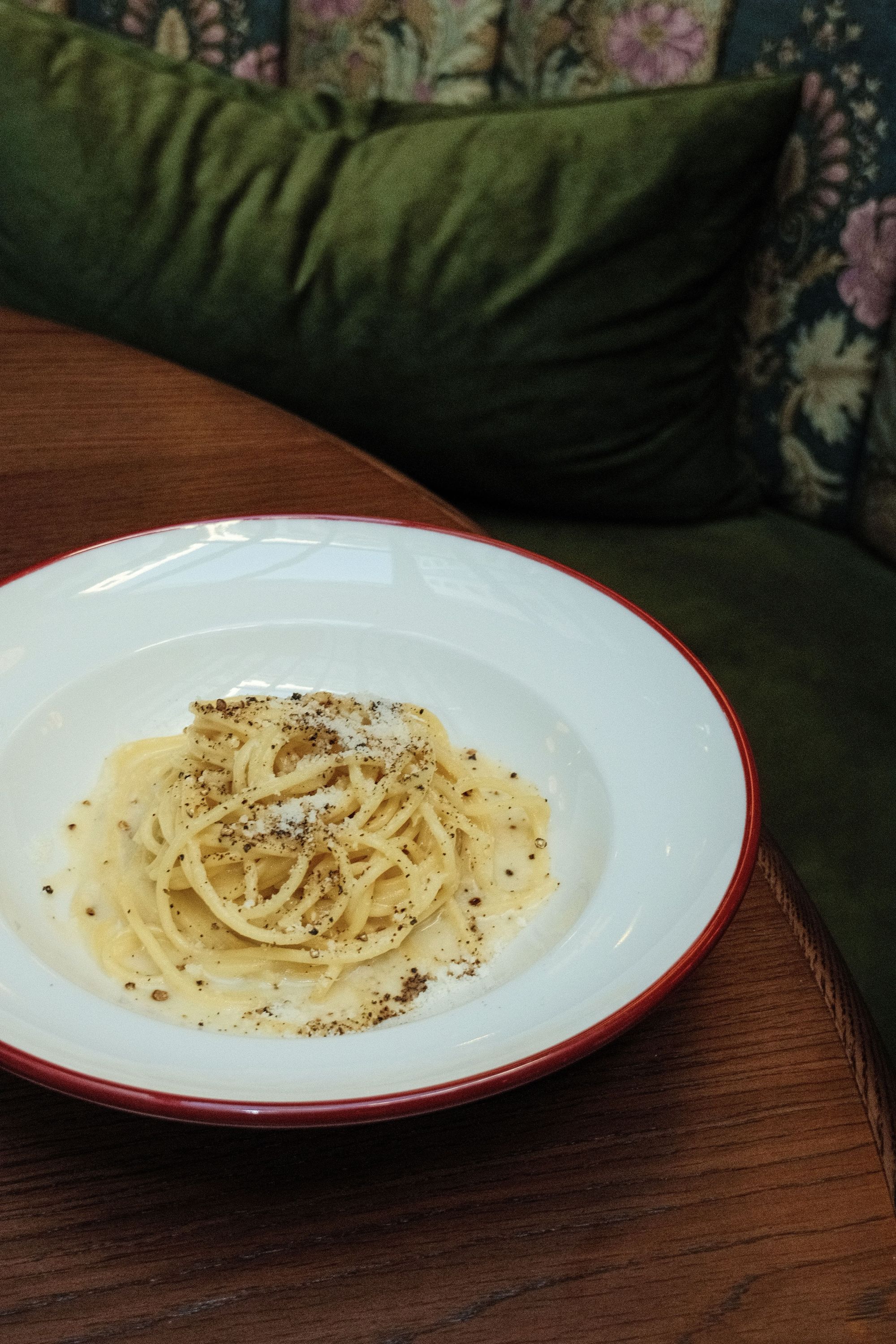
The cacio e pepe follows the same simple-yet-great philosophy. Al dente texture, minimalist presentation, and that kind of balance you look for in a small trattoria around Rome. Meanwhile, a light salad arrives — spinach, pear, a special balsamic vinegar — which could easily stand on its own; just as complex as a salad needs to be. To finish, a tiramisù — exactly as it is in Italy.
The cocktail list — Milan, Turin, I remember you
The cocktail menu also deserves a few lines. It features Italian classics that are currently considered a rarity in Hungary — drinks smuggled back from Milan and Turin, with a few house interpretations. It’s a place where drinking feels natural too, as much or as little as you like — drifting from dinner into Coco, sitting down in front of the piano-DJ booth, and ordering a Negroni.
Popolare is not just a restaurant, but a complex experience. In terms of Italian flavors, it currently stands at the top of Budapest’s scene — and not just on the plates, but in everything built around them. There are few places in the city where you can play chess, enjoy an authentic Italian dinner, and then, a few steps away, ease into the night over a couple of cocktails.