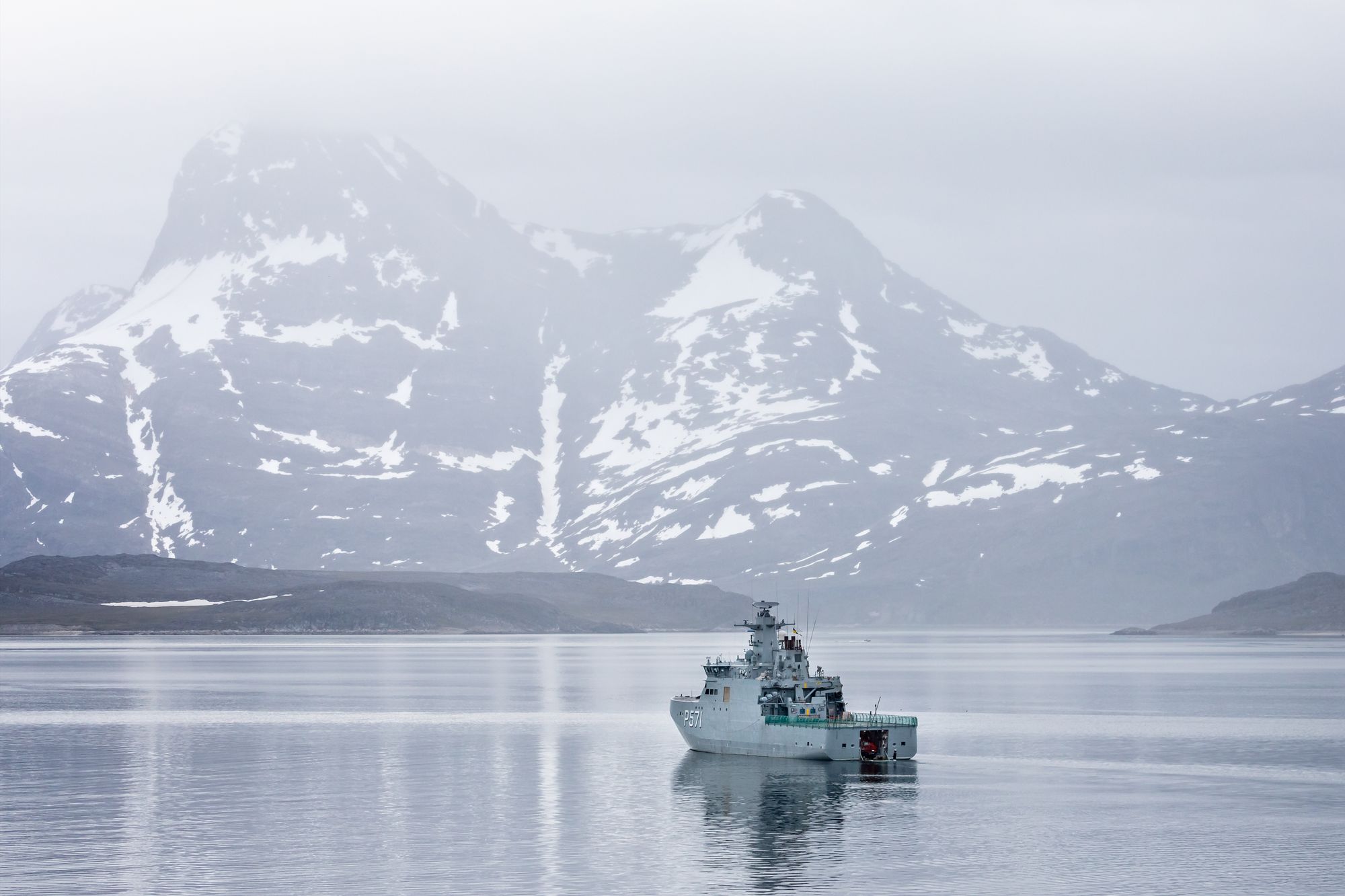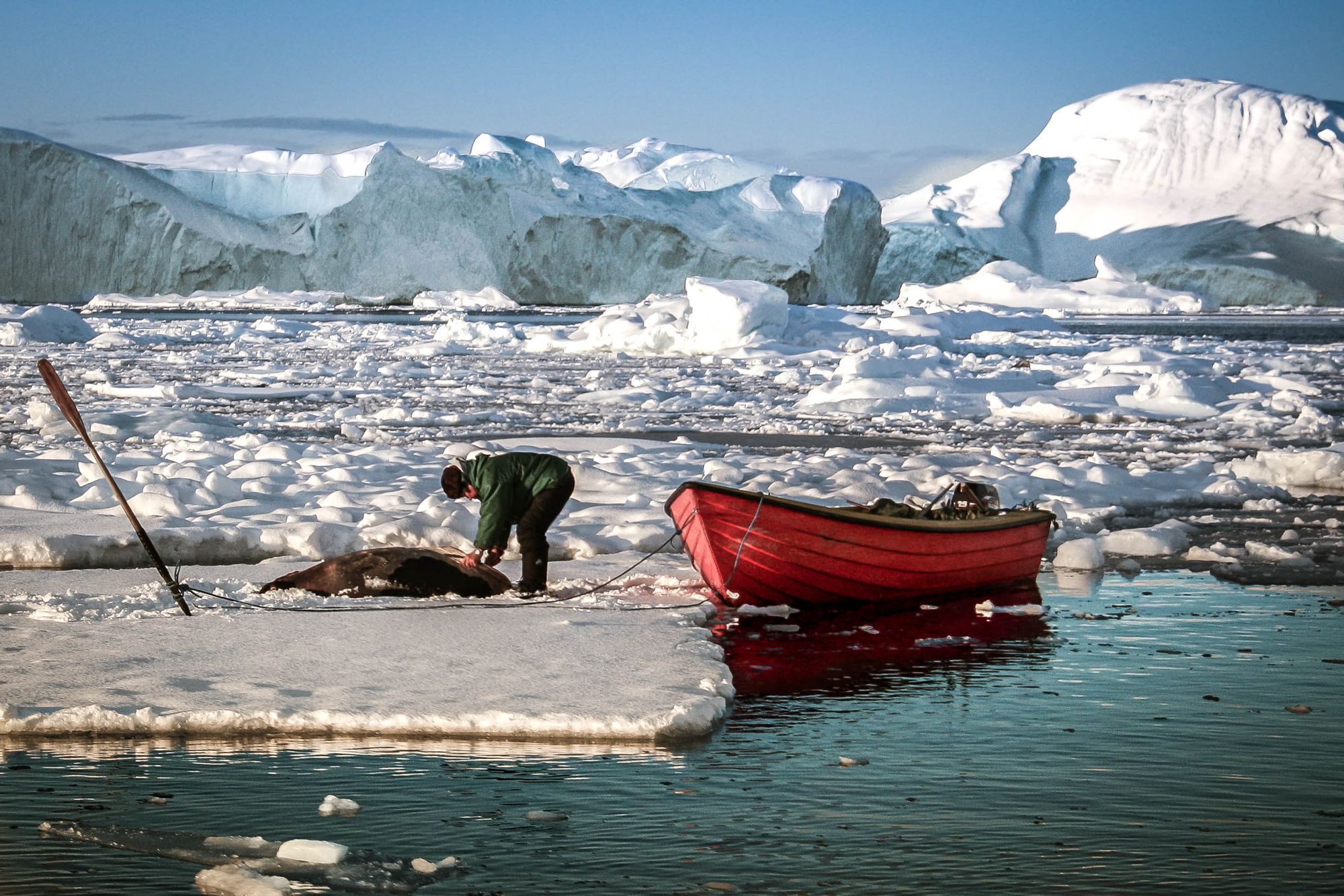
Just half an hour ago, the blazing summer sun scorched my skin; now a piercing wind slashes my face at Greenland’s Kangerlussuaq Airport. The plane door swings open to reveal a world of endless ice and silence. Once, this land was seen by the outside world as merely a remote realm of whales, cold, and water. But behind the stillness, something stirs: an invisible game is unfolding – one whose stakes the world has barely begun to grasp.
Author: Zsanett Gréta Papp
Back in 2019, Donald Trump floated the idea of the U.S. purchasing Greenland from Denmark. The seemingly absurd suggestion triggered global uproar: both Greenland and Denmark rejected it with indignation, and many viewed it as another chapter in American imperialism. Most dismissed Trump at the time, but in the 2024 campaign, he revived the topic – this time, with far more determination. It signalled Washington’s realisation that its waning global power could only be preserved by clearly delineating spheres of interest, especially in the Arctic. The very suggestion underscored Greenland’s strategic importance: the frozen land has become a focal point in the global contest for resources, military footholds, and geopolitical positioning.
The U.S. military presence here is nothing new. The Thule (now Pituffik) Air Base played a vital role in nuclear deterrence and missile defence during the Cold War, and its location remains valuable to Washington. In addition to military interests, the U.S. seeks to expand its economic and political influence: joint infrastructure projects have begun, and American companies are eyeing Greenland’s vast mineral riches. The island’s enormous deposits – especially of rare earth elements critical to green technologies – are a major draw for U.S. industry.
In the summer of 2023, I left the near 30°C heat of Budapest and landed in Greenland’s only international airport, Kangerlussuaq. I moved to the island for six months – working at the Department of Foreign and Security Policy at the University of Greenland (Ilisimatusarfik) – to experience firsthand the daily life of one of Earth’s most isolated yet geopolitically significant regions. Standing in the biting wind, I wondered whether I would reach the capital safely the next day. At first glance, Nuuk seemed utterly inhospitable. Yet that impression quickly faded: life indeed thrives across this enormous 2.2 million km² island (twenty-three times the size of Hungary), though at a vastly different scale.
Greenland is not just ice and frost (though 80% of it is covered in a thick ice sheet). It is a unique world where untouched nature, harsh weather, and human communities form a delicate balance. The people here have learned to live with nature’s unpredictability, relying on the strength of the community to survive. The majority of the population is of Inuit origin; about one-third live in Nuuk, a city of 20,000. The city reveals the duality of the Danish colonial past (with its colourful trading posts) and the globalised present: Western and Asian goods fill the shops, international companies and conferences are becoming more common – Greenland is, slowly but surely, integrating into the global economy. Yet, indigenous culture, hunting, and fishing remain a part of everyday life. Tradition and a desire for modernity intertwine, shaping the island’s future.
In 1953, Greenland became a Danish county rather than a colony, and since then, its autonomy has steadily increased. In 1979, it gained Home Rule, allowing it to govern most internal affairs like education, healthcare, and infrastructure. In 2009, the Self Rule Act expanded this further: Greenland got its parliament and government and gained authority over everything except foreign affairs, defence, and finance. This marked a major step toward independence, but not full sovereignty. The island remains part of the Kingdom of Denmark, with broad self-governance, yet is heavily reliant on Copenhagen’s financial support. Full sovereignty would require a new Danish-Greenlandic agreement and a referendum. Prime Minister Múte Bourup Egede aimed to hold such a vote alongside the 2025 elections.
On December 22, 2024, Trump once again voiced his intention to acquire Greenland. This raised serious legal and security concerns: how did he even imagine this working? The media buzzed with speculation that the U.S. might force the issue, potentially disregarding the sovereignty of Denmark, a NATO founding member. On January 13, 2025, Republican lawmakers introduced a bill in Congress titled “Make Greenland Great Again,” which would authorise Trump to initiate talks on acquiring Greenland immediately after his inauguration on January 20.
Denmark, of course, wants nothing to do with such a deal. Prime Minister Mette Frederiksen rejected Trump’s offer in 2019 and reiterated in 2025: only Greenlanders can decide their future. Denmark – whose Arctic status stems from Greenland – does not block independence but sees it as vital that the island remains within the European sphere of influence. After Trump’s remarks, Copenhagen announced a $1.5 billion package to bolster Greenland’s military defence, though this response came somewhat late.
An independent Greenland could hardly stand on its own today. It would lose Danish financial support and security guarantees, and the island, which uses the Danish krone, lacks its financial system. Greenland’s exports are almost entirely limited to fisheries, creating a narrow economic base. A newly independent state would have weak bargaining power and high vulnerability, inevitably aligning with U.S. strategic interests. Fearing this, Greenlandic society remains divided. Without U.S. backing, it might become even more exposed to Chinese or Russian influence – unless, of course, it joined NATO, which is likely. Despite fears of growing American influence, even pro-independence politicians emphasise the benefits of cooperation with the U.S., especially in security matters.
Trump’s blunt “America First” policy made Europe realise its vulnerability. Washington now seems to espouse a new Monroe Doctrine: disregarding European interests and viewing the Americas and the North Atlantic as its natural sphere. Unsurprisingly, the European Commission opened an office in Nuuk in 2024 – Brussels does not want Greenland slipping away from European reach, even though the EU’s leverage is limited (especially as Greenland is not an EU member, thanks to special agreements). An American show of force could also set a dangerous precedent, emboldening Russia or China in their own disputed territorial claims, and potentially straining NATO.
China seeks Arctic footholds by financing ports and mines, especially eyeing Greenland’s rare earths, since it already controls a significant share of global supply. Russia, meanwhile, aims to gain from the opening of northern shipping routes and massive Arctic resource fields brought about by climate change. Moscow and Beijing are deepening their Arctic cooperation: Western sanctions have pushed Russia closer to China (as buyer and investor), while Beijing gains stable access to resources. The U.S. was late to grasp this dynamic, having largely withdrawn from the Arctic post–Cold War. Now it is trying to catch up through diplomacy, reopening its Nuuk consulate, and expanding its presence.
Washington will likely seek to increase its influence through economic investments, too, particularly in extracting and processing strategic raw materials. This brings not only profit but strategic control over key industries, curbing Chinese dominance. Greenland’s formal independence, from this angle, is secondary: Washington will likely strengthen its Arctic footprint in partnership with Denmark to prevent Russian-Chinese dominance.
“Greenland Belongs to the Greenlanders” – The Decisive 2025 Election
On March 11, 2025, Greenland held a crucial parliamentary election (the last one was in 2021). The island’s roughly 41,000 eligible voters chose the path forward. The campaign covered many domestic issues – healthcare, education, housing, mental health, economic self-sufficiency – but the core issue was the timeline for full independence. Trump’s return to the White House gave the debate new urgency – Washington’s growing interest became a domestic political factor.
For Greenlanders, decisions about their future must not be made in Copenhagen, nearly 3,000 km away. Yet public sentiment on independence has fluctuated over the past two decades: sometimes a majority supported it, other times not. Many fear the island cannot sustain itself economically on its own.
The governing pro-independence IA–Siumut coalition hoped Trump’s threats would strengthen Greenlanders’ resolve and capitalise on independence promises during the campaign.
Initially, Greenland appeared only in the tweets of a few U.S. politicians, but soon Trump himself began speaking openly about acquiring the island. By January 2025, he hinted at economic or even military pressure. In early March, he addressed “the wonderful people of Greenland” in a congressional speech, promising them wealth and suggesting they could join the U.S. “We’re going to get it–somehow we’re going to get it,” he said. On the eve of the election, Trump repeated his message of Greenland’s “enrichment” on his social platform. These unprecedented statements influenced the campaign.
The surprise of the election was the liberal Demokraatit party’s unexpected success: tripling its previous vote share, it secured nearly one-third of the vote and ten parliamentary seats. Naleraq, the party pushing hardest for rapid independence, won eight seats – its best result ever. The former ruling parties suffered heavy losses: IA got seven seats, Siumut only four. Atassut secured two seats, and a new small party failed to enter parliament. The vote showed that most Greenlanders still value broad autonomy within the Danish realm.
With ten seats, Demokraatit lacked a majority in the 31-seat parliament (16 needed), so it needed coalition partners. Naleraq was out of the question – their goal of declaring independence within three years was incompatible with Demokraatit’s vision of achieving economic self-sufficiency before political independence. In the end, Demokraatit allied with IA, and support from Siumut and Atassut stabilised the coalition. Although Demokraatit is centre-right and IA is left-wing, they set aside ideological differences to defend Greenland’s interests against U.S. threats. The new four-party government was formed on March 28, 2025.
On the same day, a symbolic incident occurred, highlighting the tensions born of great power rivalry. U.S. Vice President J.D. Vance visited Greenland for a cultural event (including a traditional dog sledge race), but his trip, seen by many as “external interference” during coalition talks, was met with fierce protests. Due to demonstrations in the capital, events were cancelled, and Vance visited only the Pituffik base briefly. Both the Greenlandic and Danish governments formally objected to the visit. Egede emphasised that Greenland’s right to self-determination must be respected.
Thus, Greenland’s fate continues to be shaped on two fronts: in the icy realities of daily life and the fiery chessboard of geopolitics.