


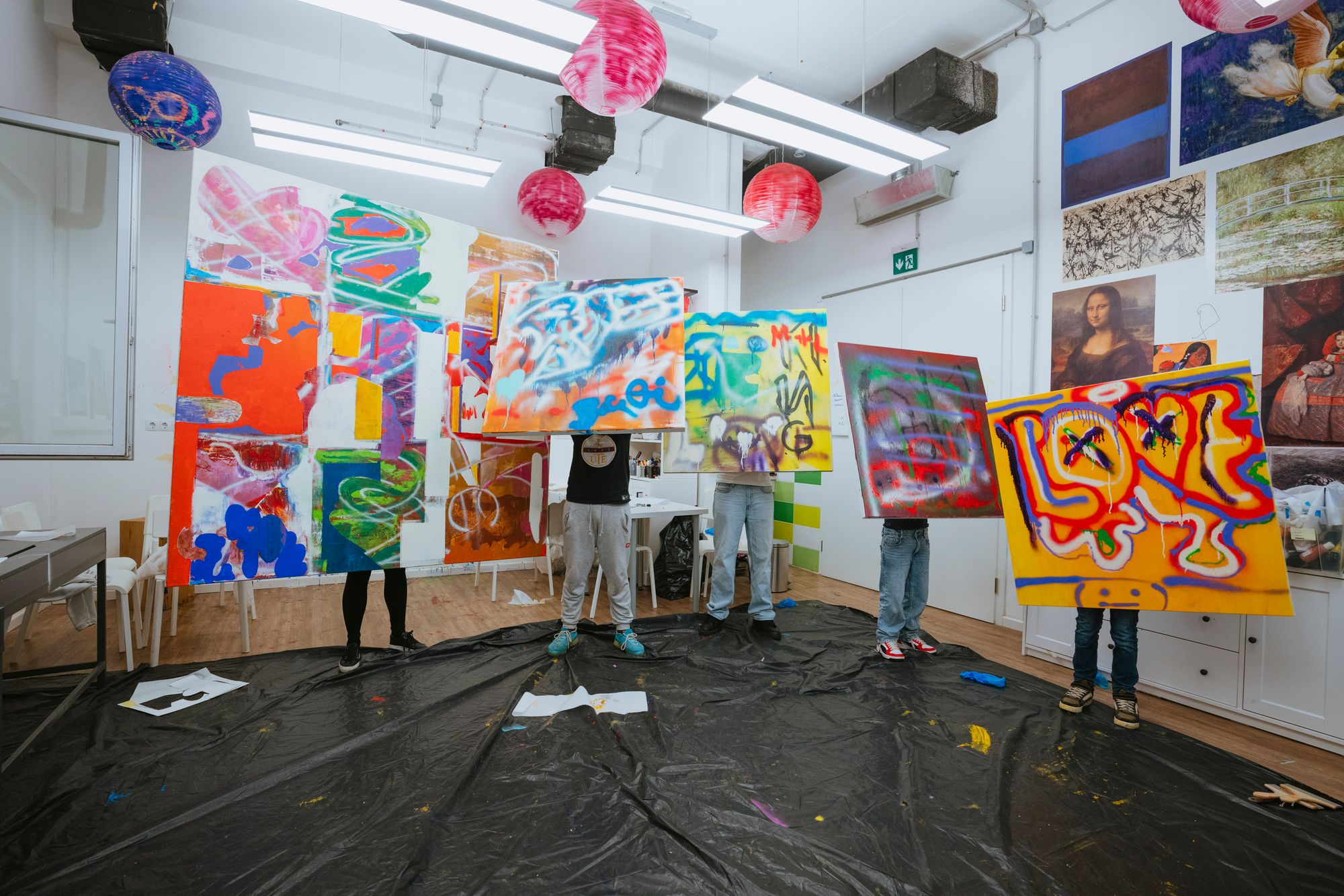
For its 15th anniversary, the Világszép Foundation presented the exhibition Világszép Contemporary Connections at the Ludwig Museum. Twenty-four contemporary artists and seventy-seven children in state care came together in workshops that, beyond fostering deeply sensitive encounters, also gave rise to new artworks.
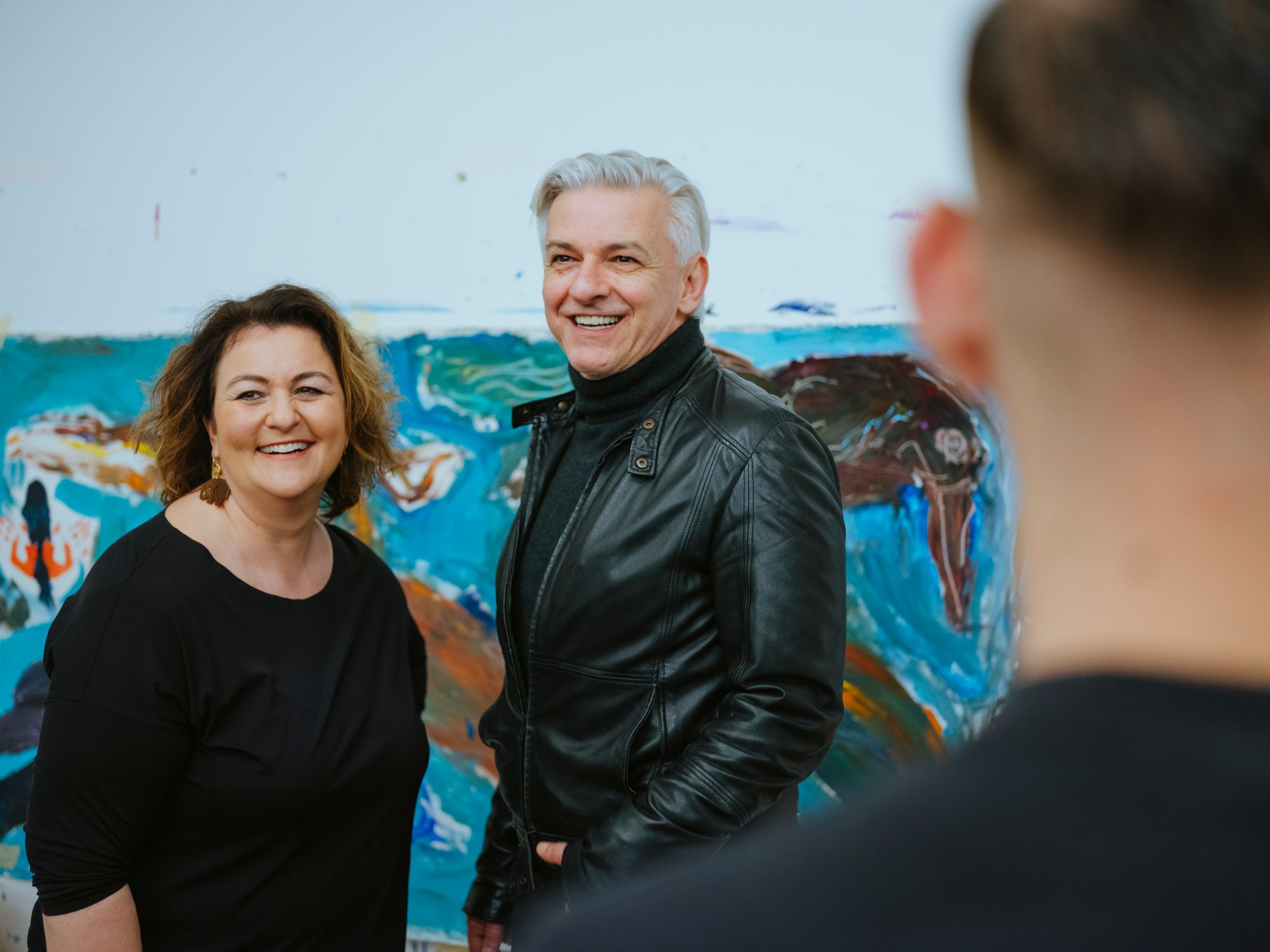
They created visibility out of invisibility – something at once intimate and profoundly social. We spoke about this extraordinary project with Ágnes Wirtz, the founder of the foundation, and visual artist Dániel Kármán, one of the participating creators.
The Contemporary Connections exhibition celebrates the 15th anniversary of Világszép. What, in your view, makes this project different from previous Connections, and why was it important to appear in a major institution this time?
Ágnes Wirtz: Five years ago, for our 10th anniversary, I organized a similar project. Back then, a “connection” meant that an artist met a young person, and after a conversation, an artwork was created.
This time, the children had a much greater role: over the past year and a half, 24 artists visited us and worked with small groups of two, three, or five. There was one exception: Szabolcs Bozó joined one of our kindergarten groups, where 18 little ones were waiting.
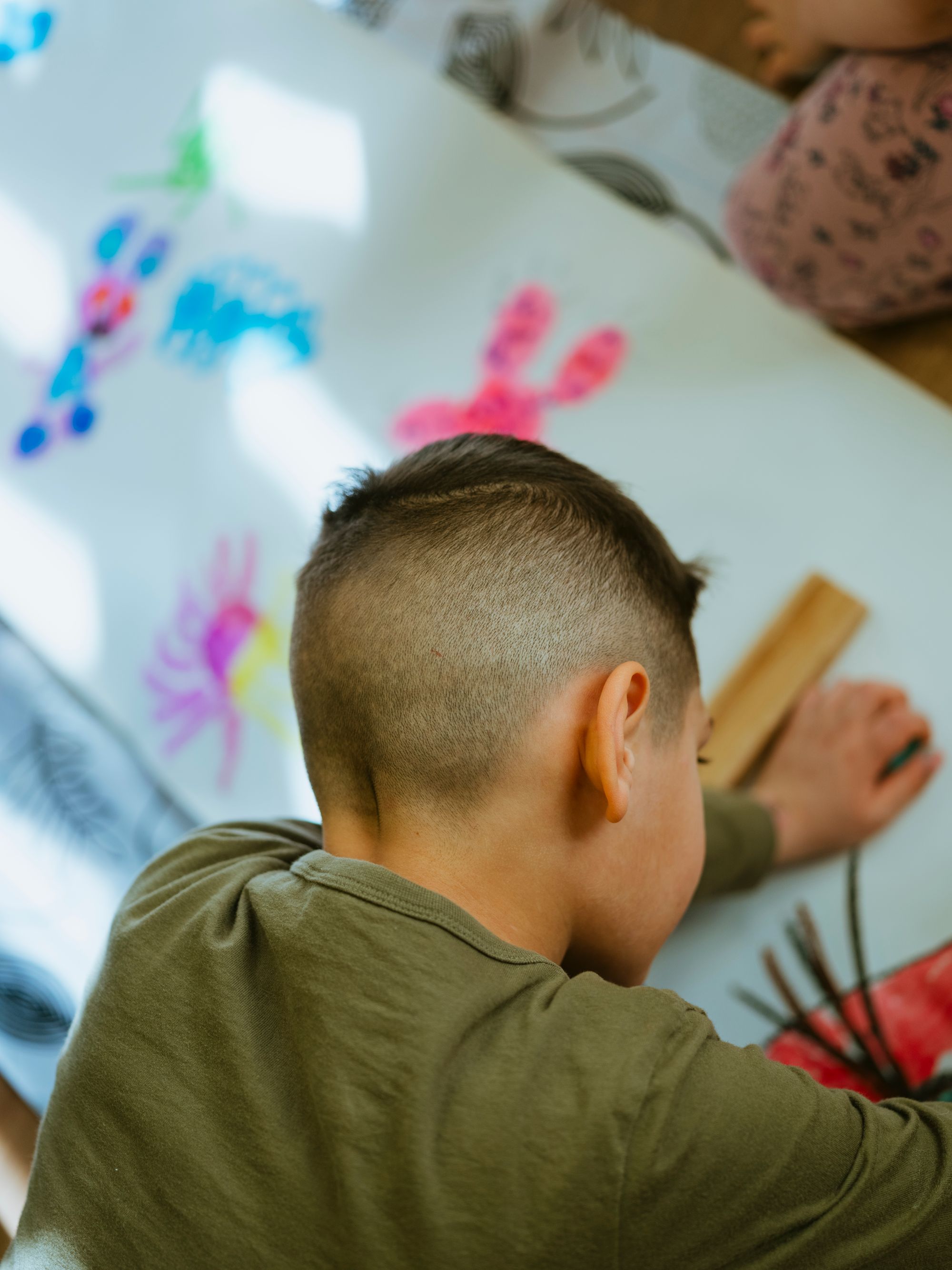
Before each session, I showed the children one of the artist’s works – they discussed it first, sometimes playfully, sometimes seriously, depending on their age. Then the guest arrived, and the shared creation began – often followed by dinner together or play.
In the third phase, the artist created something individually, in their own environment, that resonated in their artistic language with the experience. All three stages are now presented at the Ludwig, allowing visitors to immerse themselves in the full process.
It has long been my dream to showcase this work in such a major institution, and I am immensely grateful to Dr. Júlia Fabényi for embracing it. On one hand, this makes the 77 children visible – children who are often invisible in the eyes of society. On the other, it allows us to share with a wide audience just how extraordinary they are: how diverse, how rich their ideas about the world.
Dani, when and how did this project find you? What was your first thought about working with children, and how did it eventually unfold?
Dániel Kármán: In 2023, I had a solo exhibition where Ágnes told me about the upcoming project and invited me to take part. Honestly, my first thought was that working with children is a responsibility – and I had no prior experience. Soon I realized that what seemed like a challenge beforehand became an experience afterwards.
For our first encounter, Ágnes brought one of my paintings to the children and asked them to discuss it, to interpret it. The painting was titled Somewhere We Got Lost, reflecting on the collective experience of losing one’s way.
The children tried to project this sense of being lost onto their own circumstances. One of them said: “Well, we got lost in the zaci.”
I later learned that “zaci” is their word for state care. That was when I understood how precise and self-reflective that statement was.
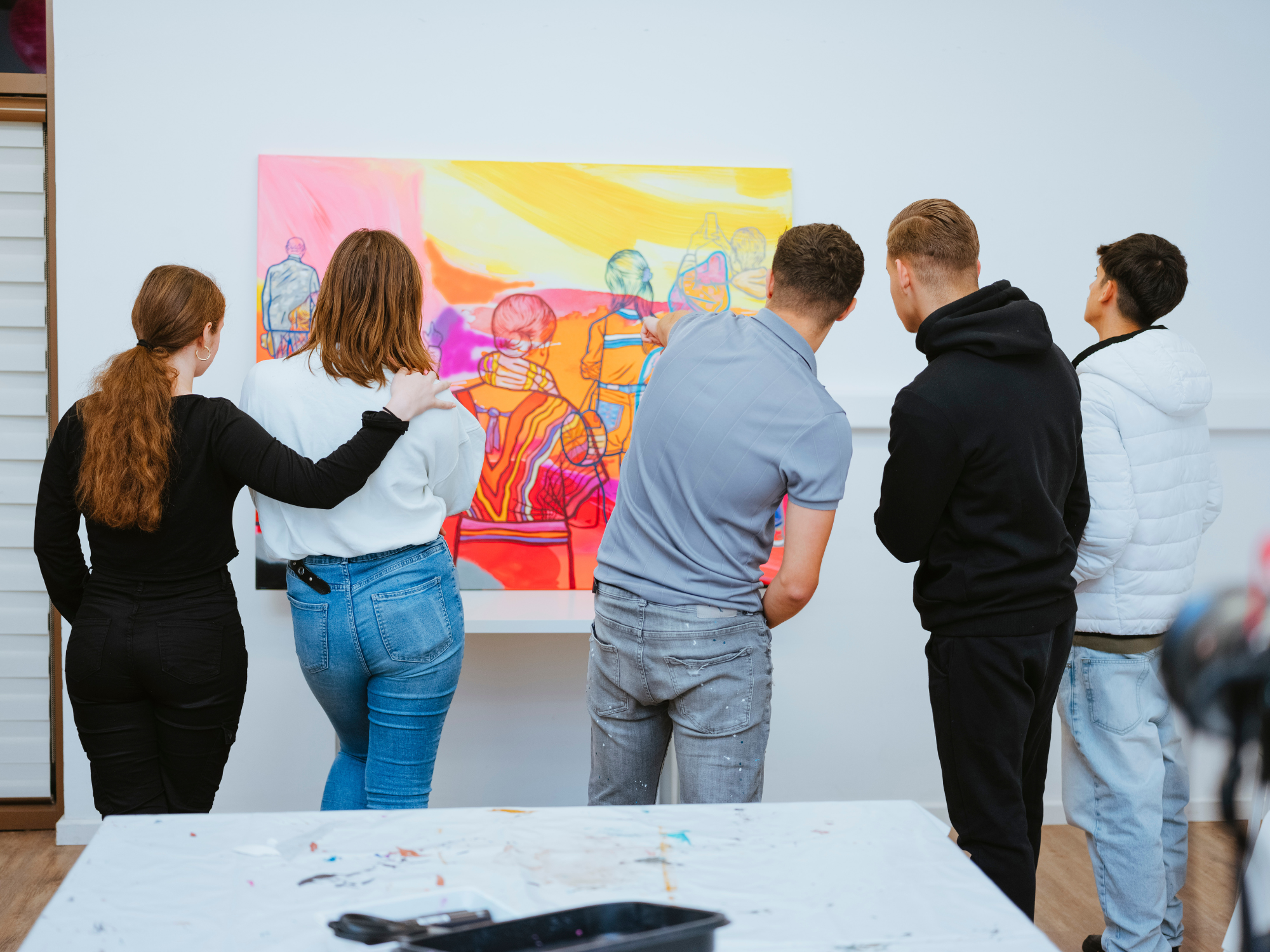
It struck me deeply, and so I wove it into the work I created for this project, which I eventually titled We Got Lost in the Zaci. Through a subjective symbolic language, I depicted how I came to see the children’s situation.
Were there moments between the artists and the children that especially touched you, or brought surprising turns?
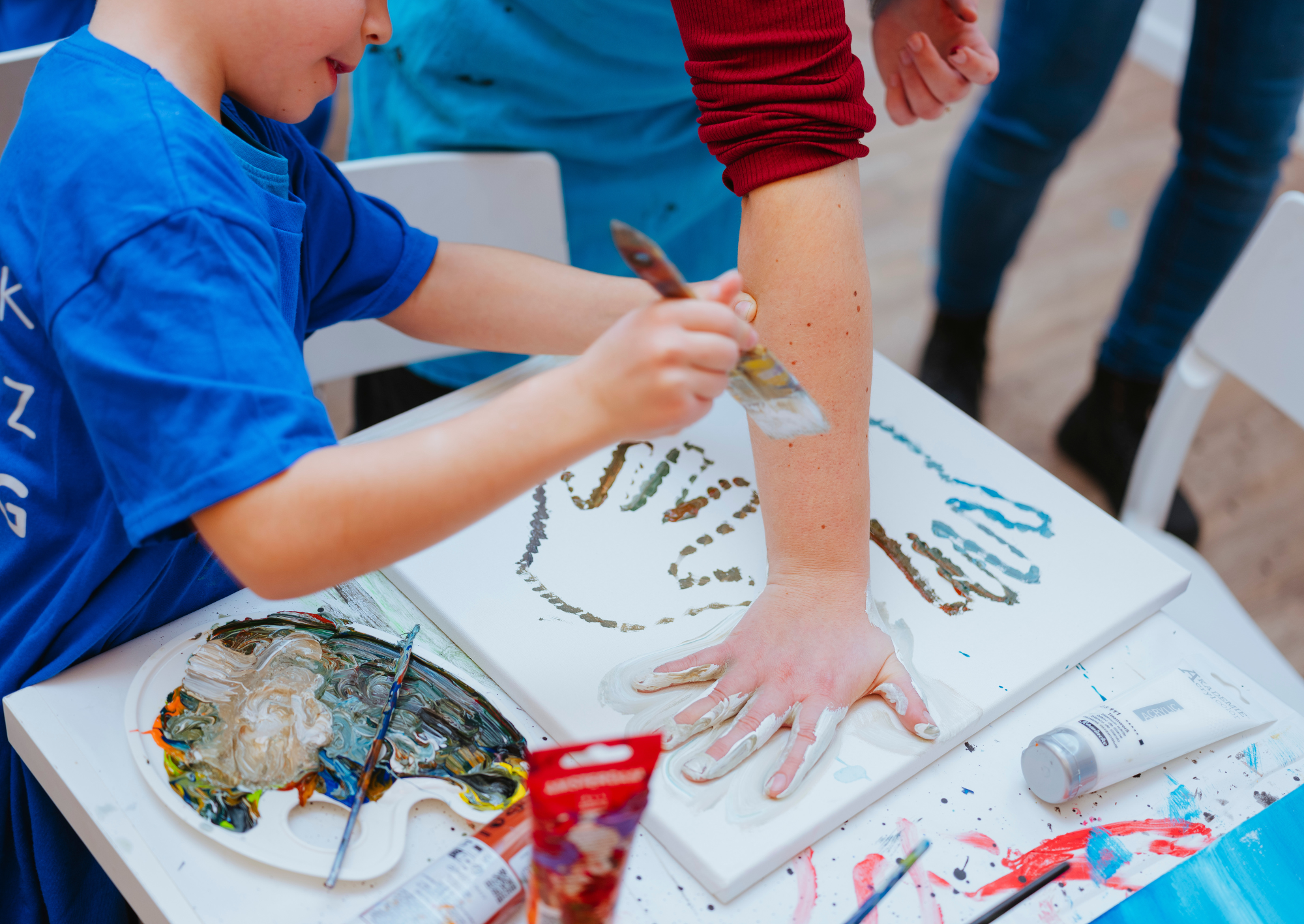
Ágnes Wirtz: There were many. For instance, a 12-year-old girl once asked Anna Nemes whether anything bad had happened to her as a child, because that’s what she felt in her artwork. Anna answered honestly, and a 13-year-old boy then gently added: “Only share if you’re comfortable with it.” That single sentence carried so much empathy. It was no coincidence that, in that workshop, we were working with the boundaries of the body: ink dropped into water spreads only as far as the surface allows. It was a beautiful, profound process.
And yes – anyone who works with children knows that unexpected turns are more the norm than the exception. I often say: I toss up a ball, give an impulse, and the most wonderful part is that they take it further freely, but always within the safe framework I provide.
Dániel Kármán: When I introduced my technique, I brought stencils, so whoever wished could work with those. It was fascinating to see that although they used the very same stencil, each work turned out entirely different.
What was remarkable was how much personal emotion they infused into a given frame – in this case, literally. Later, we created a large piece together, into which I didn’t physically intervene at all. Instead, we brainstormed step by step what solutions to try. My goal was for them to have a joyful, liberating experience of painting – perfection had no place in those few hours.
The connection with artists must have been cathartic for everyone. What do you think will remain with the children in the long run?
Ágnes Wirtz: That’s complex, and I don’t know the definitive answer, though I’ve thought about it often. What I do know is this: the lasting element is not the relationship with an artist, but the continuity of our foundation. The workshops took place as part of our regular club sessions, which will continue for them. Beyond that, we have ongoing camps and excursions, but most importantly, there are the educators and staff members who remain steadily present in their lives for years. That’s what provides real permanence and reliability.
Of course, they also carry with them the experiences from this project: that renowned Hungarian painters came to them, connected with them sincerely, and that art can help process painful experiences, liberate, and create flow.
Dániel Kármán: I hope they remember that painting felt good on a visceral level – that it was light and carefree. If that stays with them, then we’ve achieved something.
Ágnes, you often mention your background in art history and the way you bridge disciplines – essentially making them transcend themselves. How do you see contemporary art contributing to social awareness, especially when it touches on the lives of children whose stories we rarely know?
Ágnes Wirtz: Children are instinctively aligned with what is contemporary – because they truly live in the here and now. When a young person is free to associate without being held back by explanations about an artist’s birth date or stylistic traits – that is life itself, a reflection of their own experiences. I told them this as well: we can relate to an artwork as we do to another person – we may have prejudices, but intuitively we quickly sense when something affects us more deeply.
Contemporary art can indeed foster social awareness, but it’s important that the artist does not set out to “sensitize” – that would make the process didactic, and to me, no longer art. But if a work arises from something elemental, deeply personal, and takes on a unique form, then yes, it can truly reach people.
The works on display here are effective in this sense because the 24 artists we invited, together with my co-curator Róbert Alföldi, are all people who naturally carry this openness and curiosity within them. It is part of their art. With these works, they are not abandoning their artistic path, but rather affirming their authenticity.
What was the greatest challenge in this large-scale project – logistically, personally, or emotionally?
Ágnes Wirtz: The 24 workshops themselves were pure joy, pure flow. They gave me the energy to tackle all the remaining tasks, like securing sponsorships. Of course, such a large-scale project can only be realized with a fantastic team, and they took on many of the logistical challenges for me.
If I’m honest, what weighs most heavily on me is financial sustainability. As founder, I feel a responsibility to ensure that what we’ve built continues long-term – so that the children who attend our kindergarten today can still receive support when, as adults, they face life’s big decisions. In the beginning we financed everything from our own resources, but by now the foundation has grown to a scale where external support is essential. That’s why it’s crucial that enough donations come in – through the auctioning of the 24 new works created for the project, and also by visitors who, upon learning about our work, choose to support us.
What do the next 15 years mean for the Világszép Foundation?
Ágnes Wirtz: The most important task is to continue the professional work we’ve started. Together with my colleagues, we’ve developed a program that shows how we can offer opportunities to children who are often multiply traumatized and in state care, while cooperating with state institutions. We’ve established a mentoring program, we’ve run our summer camp in Paloznak for 15 years now, we have ongoing Connections workshops, our volunteer storytellers regularly visit five partner children’s homes, and we run the inclusive Pendula Kindergarten, where children from families and from children’s homes learn side by side.
We know how underfunded child protection services are, and today’s economic climate is not easy either. Our aim for the next 15 years is to ensure sustainable operation, so that the people and safe places that support these children remain. Our commitment is unwavering: no matter how difficult the system, we focus only on ensuring the children always have someone to hold on to in the storm.
If you had to summarize in a single sentence what this project meant for you?
Dániel Kármán: If you have the chance to help, to support, or simply to give someone a good experience, it’s worth doing. I hope we succeeded.
Ágnes Wirtz: This exhibition emphasizes the importance of shedding prejudice and opening with curiosity toward the unrepeatable uniqueness of others. Learn their stories, their thoughts, understand their situation.
But perhaps what summarizes our achievement even better is the 300-page, bilingual catalog published by Open Books, which documents everything. We hope that through it, the project and its message will not fade away.
The exhibition closes on October 12, and the auction will take place on September 25 at the Ludwig Museum.
The catalog is available for purchase via the Világszép Foundation’s website.
Világszép Foundation | Web
Ludwig Museum | Web
Dániel Kármán | Instagram