


From campfire brews to specialty waves: the ever-changing world of coffee by Stanislav Andranovitš.
Coffee trends, like any other trends, are always changing. Before globalization, coffee was shaped by local traditions: Italians perfected espresso, Turks and Arabs brewed strong unfiltered coffee in a cezve or ibrik, and in Ethiopia, the birthplace of coffee, the beans were roasted fresh as part of a ceremonial preparation directly in front of a guest.
From campfire brewing to World War trenches
Some brewing methods were quite exotic. For example, so called “egg coffee,” appeared in the 19th century, likely among Swedish and Norwegian immigrants in the American Midwest. Facing poor-quality coffee and no filters, they began using eggs to soften the taste and clarify the drink, giving rise to what became known as Swedish egg coffee in the US. Globalization brought cultures closer together, and coffee became part of this exchange, opening the door for new trends to emerge. At the same time, it also encouraged the standardization of brewing methods: exotic techniques, like the Swedish egg coffee, couldn’t make it into the mass market, as people prioritized cost and ease of preparation. This shift set the stage for the first modern trend in coffee culture: the so-called First Wave emerged before the 1960s and was driven by accessibility and simplicity.
Back then coffee became a widespread commodity, available for everyone and started to be part of morning routines. Ground coffee appeared in the supermarkets, removing the need to either turn every morning into an exercise with manual grinders or to wake up the entire family with the electric grinder’s screech. Instant coffee also took over, and since taste hasn’t been an issue at that time, it literally conquered the world.
Created by the Japanese chemist Satori Kato in 1901, instant coffee first appeared in the early 20th century. It became commercially widespread later in the US and Europe. During the World Wars, it gained real popularity, as armies needed a quick and easy way to provide soldiers with a hot drink. The appeal was obvious: it was fast, convenient, and could be stored for months without spoiling. No grinding, no brewing — just add hot water, and coffee was ready. Its affordability and long shelf life made it perfect for busy households and offices, especially as urban life sped up in the mid-20th century. Instant coffee, despite its reputation as a “quick” and “unpretentious” drink, remains popular in many countries, especially in Europe. Interestingly, instant coffee consumption often correlates with GDP per capita: in higher-income countries, it tends to be replaced by freshly brewed coffee, while in lower-income countries, instant coffee retains a strong market position.
In Eastern European and Balkan countries, instant coffee continues to be the primary choice for consumers. In contrast, in wealthier countries like Germany and Sweden, consumption of instant coffee is declining in favor of freshly roasted and ground coffee. However, the United Kingdom is an exception: despite high income levels, instant coffee remains widely popular. According to some sources, 73% of Britons prefer instant coffee when preparing their drinks at home. This is likely due to a combination of tradition, convenience, and affordability.
Machine Rebellion
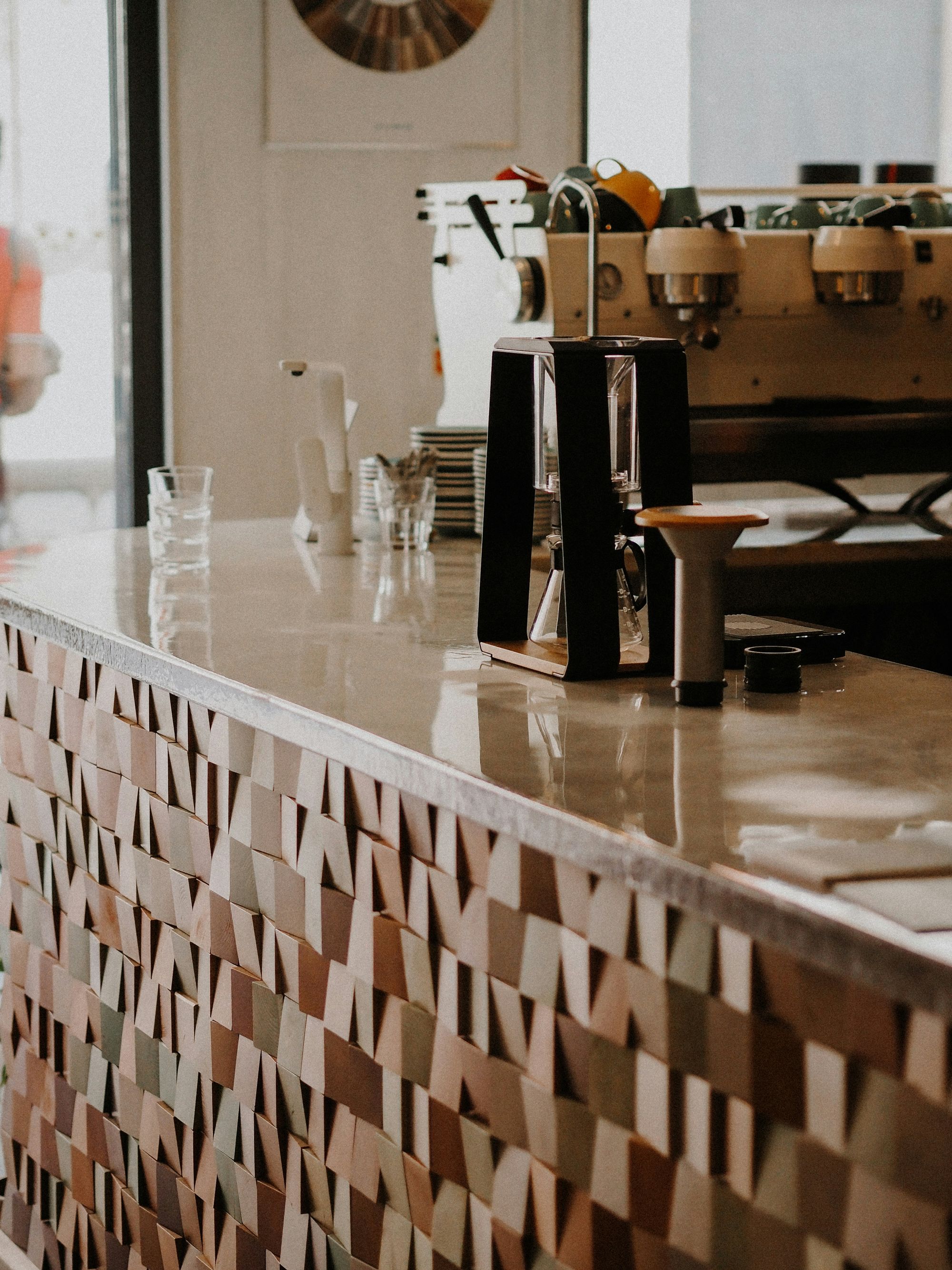
1960s-1990s was the time of so called Second Wave, when the machines took over. Coffee leveled up from a commodity to a consumer product. Pourover machines, steam-based (basically electric moka) machines and rudimentary espresso machines were all the high-tech step for making coffee at home, and only a few people could tell the difference between them. And even then, every place did their beverages differently. Nonetheless, big brands started to appear more and more throughout the globe, while milky and flavored drinks popularized coffee even in those circles, where they did not like it before. Lastly, a very important movement has started: origin and roasting got more attention. From this chaos order has been born. With the help of internet things started to radically improve. Customers became more aware of the market, more educated about the opportunities, and businesses with suppliers started to adapt. Things that have not been possible became a reality overnight.
Thus, in the beginning of 2000s the Third Wave has been born. In this world, commodity and consumer coffees got their third sibling: specialty coffee. It didn’t just focus on the caffein and cafe experience, but laid more emphasis on sourcing, processing and roasting, turning coffee into something very similar like premium wines. It didn’t just focus on taste, but also on education, ethics and consistency.
Nowadays, if a customer goes to a third-wave café and orders a latte, they’re not anymore getting a pig in a poke. The ratios and preparation techniques have been uniformized, while still giving plenty of room for the baristas’ skills. Those who drink coffee for its taste don’t mind paying higher price if they know they get something in return. This allows farmers to get a much fairer income compared to previous generations and to invest in the quality and sustainability of their fields. The entire niche became more transparent, we can track back the entire sourcing process with all of its participants, leaving no room for shady practices.
Packaging became more ecological and allows customers to make purchasing choices that would not harm their conscience. Moreover, since we are talking about food-grade products with limited shelf life, local roasteries started to grow like mushrooms after a rain, giving more market share to small businesses instead of the big corporations. And the best part? The knowledge and flavor selection that came with the third wave means that unethical practices have less and less legitimacy. Kopi luwak, or civet coffee, is one of the most expensive coffees in the world. It comes from coffee beans that have passed through the digestive system of a small, cat-like animal called civet. While this process gives the coffee a unique flavor, it often involves keeping the animals in tiny cages and feeding them only coffee berries. As coffee culture evolves, especially with the third wave, more and more consumers are rejecting such practices, valuing ethical sourcing and animal welfare over novelty.
Brewed postmodernism
Specialty coffee is truly a different world compared to commodity coffee. In commodity era nobody cared where the coffee is coming from, maximum they wrote “Columbian, or Brazilian”, but that doesn’t say a lot. Processing techniques were irrelevant, and even the roasters tried to roast it as dark as possible to mitigate any taste difference between various sources. In specialty every single cup is a tasting experience, where the plant variety, geography, process, roasting and even slight adjustments in brewing technique all add together and result in the final taste. Important is even the altitude at which coffee is grown. Beans grown at higher elevations tend to develop more complex and bright flavors, with pronounced acidity and fruity or floral notes. In contrast, coffee from lower altitudes usually has a heavier body and milder taste. This is because cooler temperatures and slower bean maturation at high elevations allow the coffee to develop more sugars and nuanced aromas.
Moreover, specialty coffee isn’t just blend or single origin, but microlots take bigger proportion of the market highlighting the rising demand for diversity. We all thought specialty coffee was already at its peak, but COVID completely rewrote our lifestyle. Lockdowns not only bankrupted many cozy cafés but also shifted people toward self-sufficiency. When people couldn’t get their coffee at their favorite café, a new market opened up: specialty coffee brewing at home.
One of the most popular solutions became drip coffee, which is especially widespread in Japan and is gaining popularity in other countries. Drip coffee comes pre-ground and packed in a filter, sealed with nitrogen to keep it completely fresh. Because the coffee doesn’t oxidize, the flavor stays intact, as if your barista just ground it for you in your favorite café. All you need is just hot water, and you can enjoy this café-quality coffee anywhere in the world. Many specialty coffeeshops now package their own coffee in drip packs, so customers can take it with them and enjoy it wherever they like. Whether you’re in the mountains, at the Sziget Festival, or in countries where good coffee is hard to find and only instant brands like Nescafé are common, a drip pack lets you drink your favorite specialty coffee without compromise.
Snobbism as its finest?
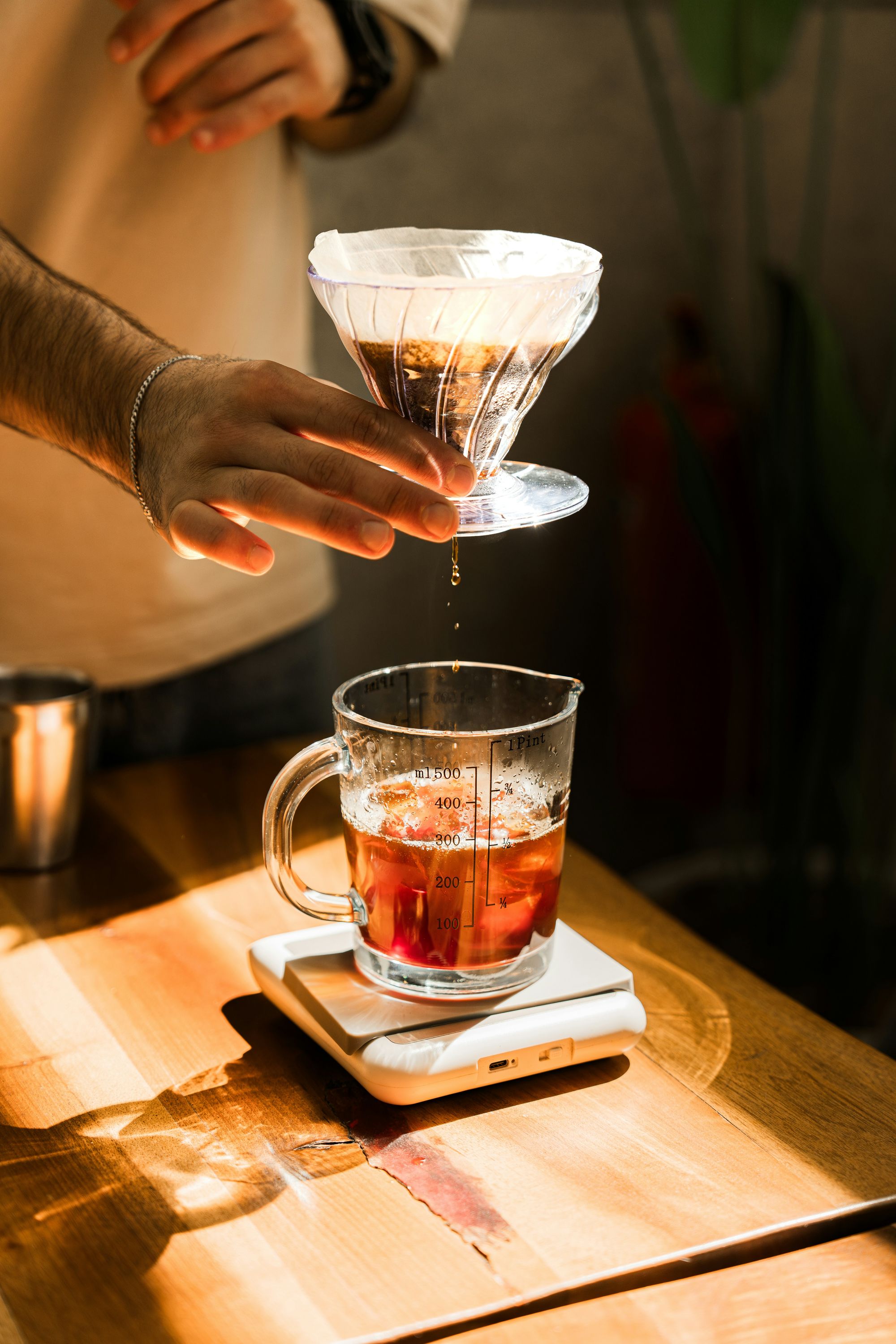
Modern coffee trends are also raising awareness about water quality. After all, coffee is 95–99% water, and anyone who drinks it black soon realizes that the water you use has a huge impact on the final taste. But why is that? Isn’t water just… water? Actually, coffee is extremely sensitive to the chemistry of water. The hardness of water caused by dissolved calcium and magnesium ions affects how flavors are perceived. Too soft, and the coffee can taste empty and dull; too hard, and then it tastes murky or even harsh. On the other hand, water’s bicarbonate levels interact with coffee’s acidity. Firstly, we need to clarify: coffee is acidic, period. But should it be actually sour? Fortunately, no. Fruity acidity and juiciness is more than welcome, but pickle-like sourness is a sign that something went wrong: usually water. Too low bicarbonate level, and the coffee’s acids will prevail creating unpleasant sourness, but then too high level can lead to artificial taste or lack of flavor. In short, the chemical composition of water directly shapes how the coffee’s acids and aromatic compounds that all come together in your cup.
While the United States has long been the home of established producers of coffee mineral blends (such as Third Wave Water, Perfect Coffee Water, and Coffee Water Pro), Europe is gradually catching up, and the trend is spreading across the continent. Sweden, for example, has innovative companies like Bluewater, which offers adjustable mineral solutions to fine-tune water for any brewing method. Denmark’s April Coffee Roasters produces carefully balanced mineral packs to preserve the nuances of specialty coffee, while Hungary recently joined the scene with Feketeleves, offering blends optimized for espresso and filter coffee alike.
Brave New World
Climate change hangs above global coffee supply change like Damocles’s sword. Environmental impact regarding temperature, rains, droughts, pests, diseases can all affect farmers, who are either going to adapt by spending extra on production or switch to different varieties that can tolerate the changes. Coffee prices in their turn have been rising rapidly in recent years. Climate events like droughts and frosts in major coffee-producing countries, combined with higher transport and energy costs, have pushed global coffee prices up by 20–65% over just one or two years.
However, despite all the crises, things seem to be going really well for the modern coffee industry. It can serve consumer needs from the basic ones up to the gourmet level slowly even in rural small towns. Coffee has long surpassed their caffeinating phase and now it is a ritual and tasting experience many people can afford to look forward to every time they wake up. Is there anything that’s left to progress? Honestly, progress is never linear, and many things will happen only for the mere sake of progress, so we are all curious what the future will bring. We can already see some futuristic machines that can make homemade caramel Frappuccino from scratch by the touch of a single button. We can also see AI-powered robots that promise to replace baristas.
But is there a plausibility these would eventually take over? It is difficult to say for multiple reasons. Convenience and efficacy are key factors, but we still haven’t reached the phase where they can overcome quality. Coffee is inherently messy. Static electricity makes it fly and stick to any surface, oils make things greasy and difficult to clean, and even the grounds don’t behave as free-flowing powders. This means with our current level of technology human touch is still needed. Not only because it produces better quality coffee, but also because coffee is a ritual, a social event, an artisanal experience, and things that were made by love and care will always be more precious for us than things that are made by machines. But what will happen next? We need to see and enjoy every cup that comes along the journey.